


TESTAMENT (US, 1974, James Broughton)
/
“TESTAMENT is James Broughton's exquisite self-portrait. A major figure in avant-garde filmmaking and poetry since the 1940s, Broughton views his life and life's work with irony, charm, humor, and a combination of joyous self-love and gentle self-depreciation. Scenes from his earlier films mix the elements of humor, magic, slapstick, melodrama, and romance which mark his aesthetic. A plethora of rich personal symbols is woven throughout the film, tied together by verbal games, Zen poems, anecdotes, songs, a child's prayer, dreams, and visions.” —Karen Cooper
By the mid-1970s, the utopian ambitions of the counterculture had been undercut by a series of political and societal devastations that saw Americans shift from peace, love, and communal living to fatalism and introspection; sociologists would later dub the ‘70s the “Me Decade.” James Broughton’s TESTAMENT (1974) echoes this inward-looking cultural shift as Broughton reflects on his “quest for erotic transcendence” by amalgamating his voiceover with fragments of his previous films, combined with newer footage. The artist himself remarked, “I thought this would be my final film… it’s a self-portrait bouncing me from my babyhood to my imagined death.”
“A beautiful, important, mysterious work.” —Amos Vogel
While TESTAMENT prophesies Broughton’s passing and proves less hedonistic and more plaintive than, say, THE BED, it nonetheless retains a fair amount of the joy, mysticism, poetry, and song that characterizes much of the artist’s oeuvre.
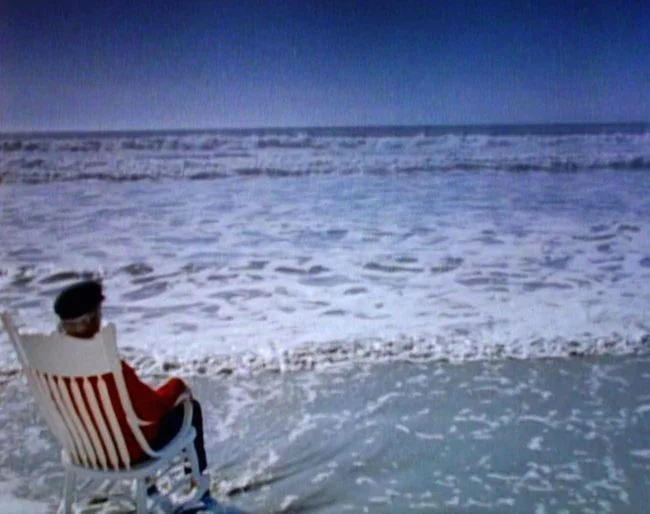
The film begins with Broughton in a rocking chair, on the shore, overlooking the ocean. His voiceover says: “I asked the sea how deep things are. ‘Oh,’ she said, ‘that depends upon how far you want to go.’ ‘Well, I have a sea in me,’ said I. ‘Do you have a me in you?’ This introduction operates as a framing device that establishes the film’s autobiographical nature, as Broughton begins to tell us the story of his life.
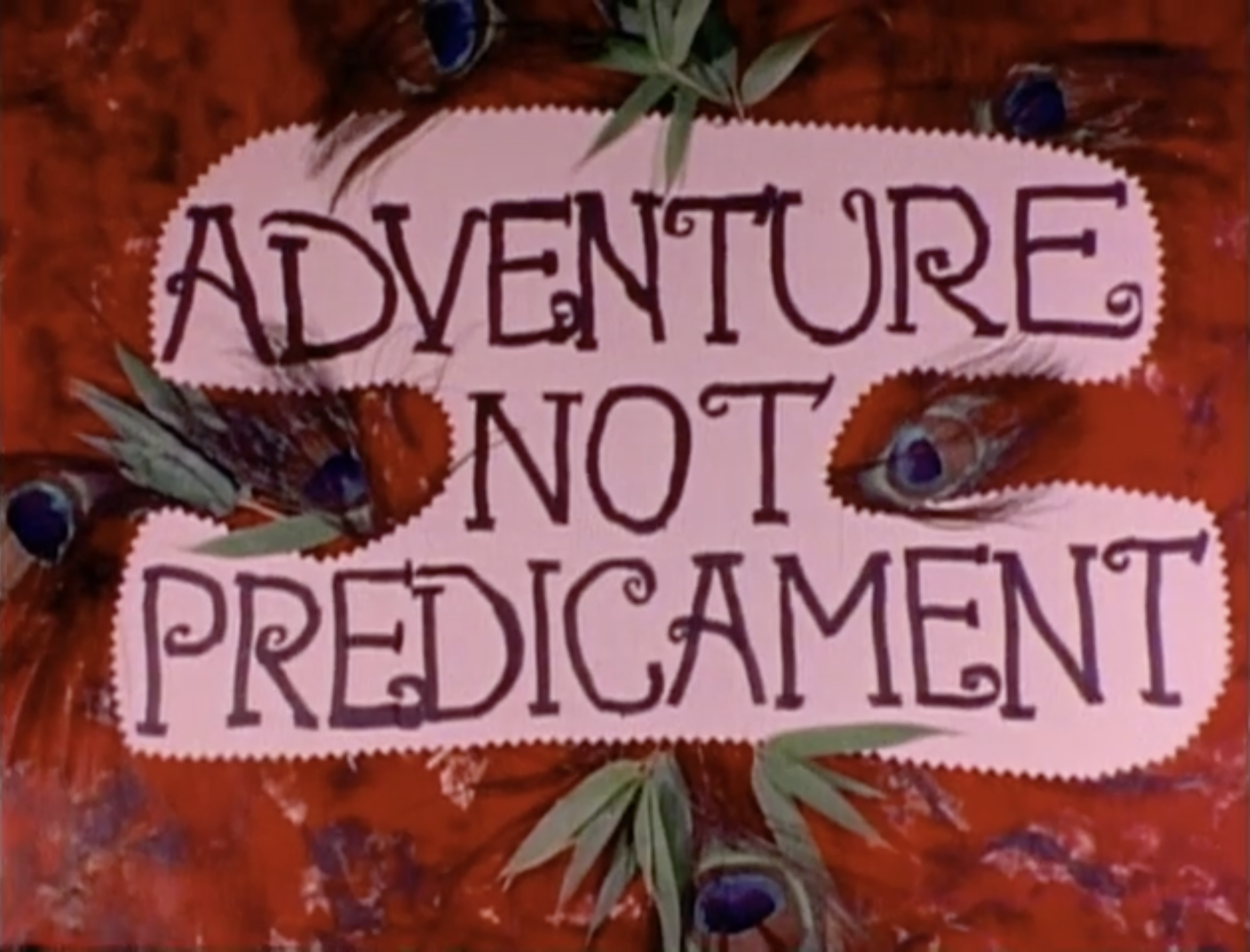
Throughout, colorful title cards interject Broughton’s footage to offer such mantras as “Adventure Not Predicament,” “Allness is Ripe,” and “Always Keep in Focus,” thereby emphasizing the filmmaker’s joie de vivre. These title cards also subvert the conventions of narrative linearity and self-seriousness often associated with autobiography.
Furthermore, the film’s mixture of old and new footage, combined with music and voiceover, has a collage-like effect. Thanks to the variegated and always engaging visuals, TESTAMENT manages to be contemplative and introspective without ever devolving into navel-gazing.
“James Broughton's TESTAMENT is one of the most remarkable films ever produced within the American independent cinema. It is the most moving and most sublimely detached of the recent trend of filmic autobiographies - by Jerome Hill, Jonas Mekas, and Stan Brakhage, to name only the masters, and Broughton's peers.” —P. Adams Sitney
TESTAMENT
(US, 1974)
Director: James Broughton
- 20 minutes
- 16mm
- Color
- Sound
Distribution Format/s: DSL/Downloadable 1080p .mp4 file on server
Published By: GME
Classroom Price: $250
Institutional Price: Inquire
To order call: 212.280.8654 or click here for information on ordering by fax, e-mail or post.