


THE PLEASURE GARDEN (US, 1953, James Broughton)
/
”In Charlie Chaplin, Rene Clair, Buster Keaton, Jacques Tati we enjoy on a big scale the fruits of the poetic turned comic. Broughton is of their kind, except that he holds more strongly to feeling, makes short cuts they daren't, sees and sings out of himself, and never dilutes a joke or a movement. THE PLEASURE GARDEN thus combines the pleasure of Keystone with the love lyric. It springs like the lark, and mingles oddity, grace, satire, and laughter without a dead moment.” –Sight and Sound
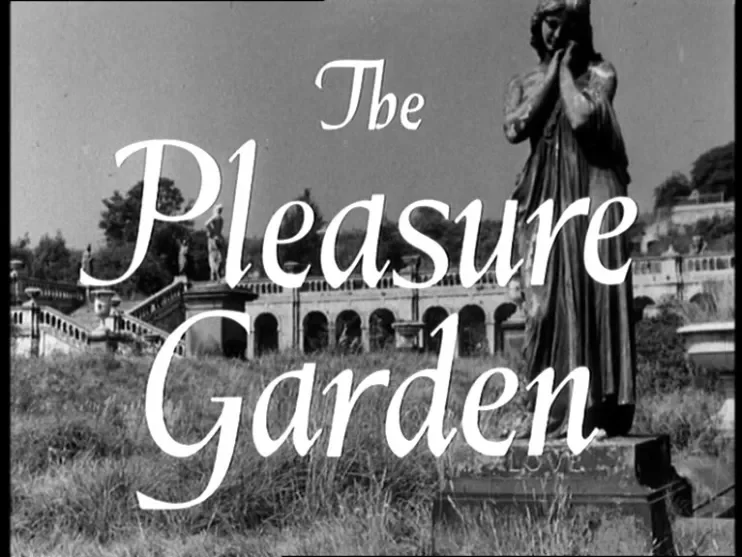
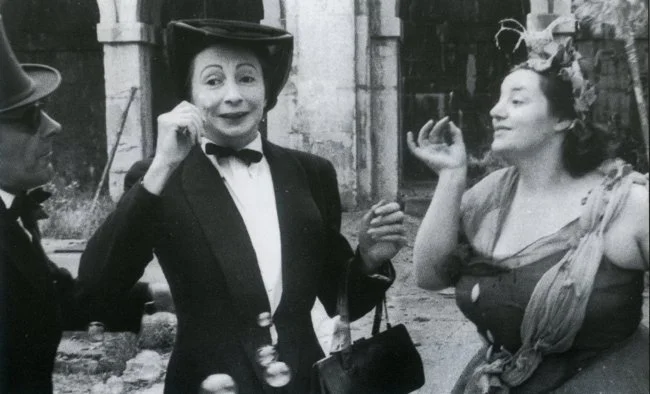
A joyous musical fantasy celebrating “Love in the Park” and “the victory of the pleasure principle over all prudes and killjoys,” THE PLEASURE GARDEN was made in London and shot in the ruined gardens of the Crystal Palace. The film depicts a rivalry of sorts between the puritanical Col. Pall K. Gargoyle (John Le Mesurier) and the bohemian Mrs. Albion (Hattie Jacques). Gargoyle is a philistine-type park keeper who cracks down on art, romance, and pleasure in the titular garden; Mrs. Albion, meanwhile, encourages creative expression and public displays of affection among the park’s visitors.
As noted by Jon Gartenberg in his program note for the 1979 MoMA exhibition James Broughton, Cinema Poet: “In THE PLEASURE GARDEN, the interplay between statues in a garden and the live characters explores the desire to make art real. Broughton creates an assemblage of odd characters moving throughout a garden where fantasies and daydreams may be played out. The film recalls Jean Vigo’s ZERO FOR CONDUCT (1933), in which the children's desires to play are repressed by the oppressive administrators, just as the figures in black in THE PLEASURE GARDEN (the aunt and the man from the ministry) hold back the couples meeting and undressing. But just as the forces of rebellion win out in ZERO FOR CONDUCT, so do they in THE PLEASURE GARDEN.”
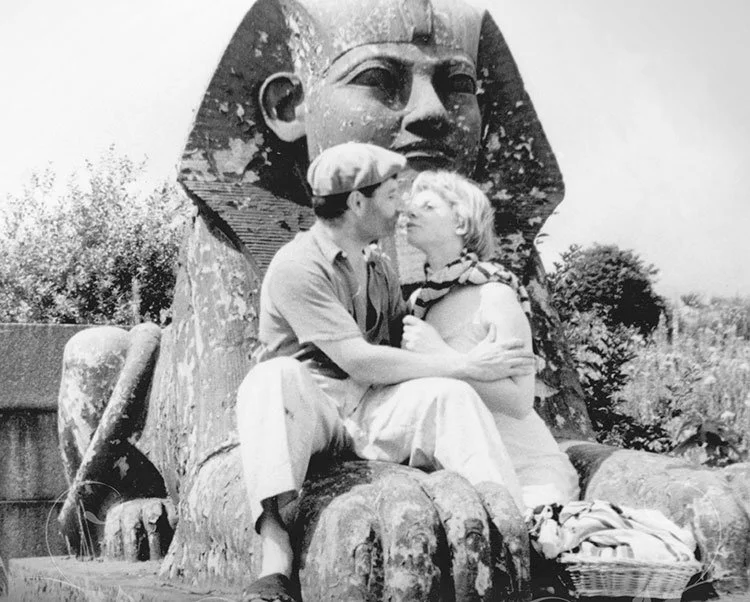
“Despite its obscurity within the canon of British cinema, watching THE PLEASURE GARDEN for the first time is a minor revelation… A poetic narrative rich with metaphors and symbolism, [it is] an artistically ambitious project… Broughton conceived [the film] as a ‘mid-summer afternoon daydream’ [and it] certainly has a whimsical, dreamlike quality. Filmed amongst the ruins and beautiful gardens and terraces of the Crystal Palace in London, it is essentially a series of vignettes, during which various eccentric and overlapping characters strive to connect, often intimately, with someone or something, each expressing their desires, fears and frustrations through action, song and narration.” —Adrian Warren, PopMatters
THE PLEASURE GARDEN was positively received by critics both in Europe and the United States when it first premiered. Broughton’s film was selected to screen at the 1954 Cannes Film Festival, where it won the Prix de Fantasie Poetique (Poetic Fantasy Prize, soon to become the Short Film Palme d’Or). In a contemporaneous review, critics at The Monthly Film Bulletin raved: “This light extravaganza by the Californian poet James Broughton… is a highly personal mixture of lyricism, mime, whimsy and caprice… It has a freedom all too rare in the cinema, and it is all freshly, unassumingly imagined: a real, a genuine lark. Professional and non-professional actors blend homogeneously under the director’s eccentric guidance, Stanley Bate’s music is full of entirely appropriate gaiety and invention, and Walter Lassally’s photography is resourceful and attractively framed.”
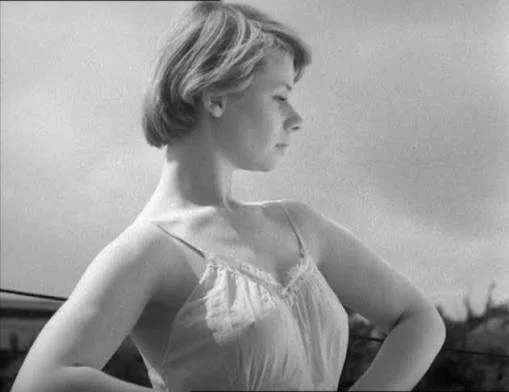
THE PLEASURE GARDEN is now widely regarded as the crowning achievement of Broughton’s early career.
”It's on the side of the angels. It's a great testimony for Love.” —Allen Ginsberg
THE PLEASURE GARDEN
(US, 1953)
Director: James Broughton
Starring: Hattie Jacques, Diana Maddox, Kermit Sheets, Jean Anderson, John Le Mesurier, Maxine Audley, Derek Hart, Jill Bennett, Lindsay Anderson, John Heawood, Hilary Mackendrick, Gladys Spencer, Gontran Goulden, Victoria Grayson, Mary Lee Settle, Daphne Hunter, Margaret Tate, Derek Rosen
Director of Photography: Walter Lassally
Music: Stanley Bate, Thomas Goff (harpischord)
Production Manager: Lindsay Anderson
- 38 minutes
- 16mm
- B&W
- Sound
Distribution Format/s: DSL/Downloadable 1080p .mp4 file on server
Published By: GME
Classroom Price: $250
Institutional Price: Inquire
To order call: 212.280.8654 or click here for information on ordering by fax, e-mail or post.