


Sonbert in the Seventies
/
In the wake of the Sixties’ communal hippiedom, which proved ecstatic and tragic in equal measure, many people turned inward and embraced introspection. Sociologists therefore dubbed the Seventies the “Me Decade.” While many artists followed that trend, Warren Sonbert chose to look outward. The triptych of films he made during this enigmatic and politically-fraught decade — 1973’s CARRIAGE TRADE, 1976’s RUDE AWAKENING, and 1978’s DIVIDED LOYALTIES — intricately amalgamate footage from the artist’s many global travels.
Beginning in the 1970s, Sonbert moved away from the quasi-narrative approach of his soundtracked early films towards a more sophisticated filmmaking methodology, sans music. Film theorist Noël Carroll coined the term “polyvalent montage” to describe Sonbert’s editing style, in which he observed that each shot “can be combined with surrounding shots along potentially many dimensions.” As similarly noted by Language poet Alan Bernheimer: “Narrative concerns pervade [Sonbert’s] films on at least three levels, all working with and against each other: nano narrative within the shot, ‘collisional’ montage, and the meta-narratives or themes running through each film.”
1973’s CARRIAGE TRADE (which is also available in the package Early Films by Warren Sonbert) was considered by the artist himself to be his “magnum opus.” In this film, Sonbert interweaves footage taken from his journeys throughout Europe, Africa, Asia, and the United States, together with shots he removed from the camera originals of a number of his earlier films. As noted by GME President Jon Gartenberg:
With CARRIAGE TRADE, Sonbert began to challenge the theories espoused by the great Soviet filmmakers of the 1920s; he particularly disliked the ‘knee-jerk’ reaction produced by Eisenstein montage… [the polyvalent montage] approach… ultimately affords the viewer multi-faceted readings of the connections between shots through the spectator's assimilation of (according to Sonbert) ‘the changing relations of the movement of objects, the gestures of figures, familiar worldwide icons, rituals and reactions, rhythm, spacing and density of images.’
RUDE AWAKENING, completed three years after CARRIAGE TRADE and similarly wide-ranging in its purview, was described by Sonbert as being “about Western civilization and its work; activity ethic and the viability of performing functions and activities.” Sonbert was influenced by a diverse group of filmmakers in his creation of this film — from avant-garde luminaries such as Stan Brakhage and Gregory Markopoulos to mainstream narrative directors like Michael Powell and Emeric Pressburger. As noted by Gartenberg, “Sonbert's vivid color palette enhances the ritualistic nature of each action observed. Set against this lush panorama, Sonbert subverts the expectation of classic cinematography with a liberal sprinkling of avant-garde techniques.”
DIVIDED LOYALTIES similarly takes a global view on the inherent tension between art versus industry and (in the words of Sonbert) their “various crossovers.” Writing for Art in America, critic Brendan Brown remarks: “In DIVIDED LOYALTIES… Sonbert’s cinema is witty, exhausting, sentimental, and full of rage. But it is never facile, and it never concedes to being any of these things all the time. To me, that seems to be its fundamental power.”

CARRIAGE TRADE (1973)
Warren Sonbert considered CARRIAGE TRADE (1973) his “magnum opus.” In this film, Sonbert interweaves footage taken from his journeys throughout Europe, Africa, Asia, and the United States, together with shots he removed from the camera originals of a number of his earlier films.
“A 16mm, 60-minute, 6-year compilation of travels, home movies, documents, shown silent. Not strictly involved with plot or morality but rather the language of film as regards [to] time, composition, cutting, light, distance, tension of backgrounds to foregrounds, what you see and what you don’t.” —Warren Sonbert
RUDE AWAKENING (1976)
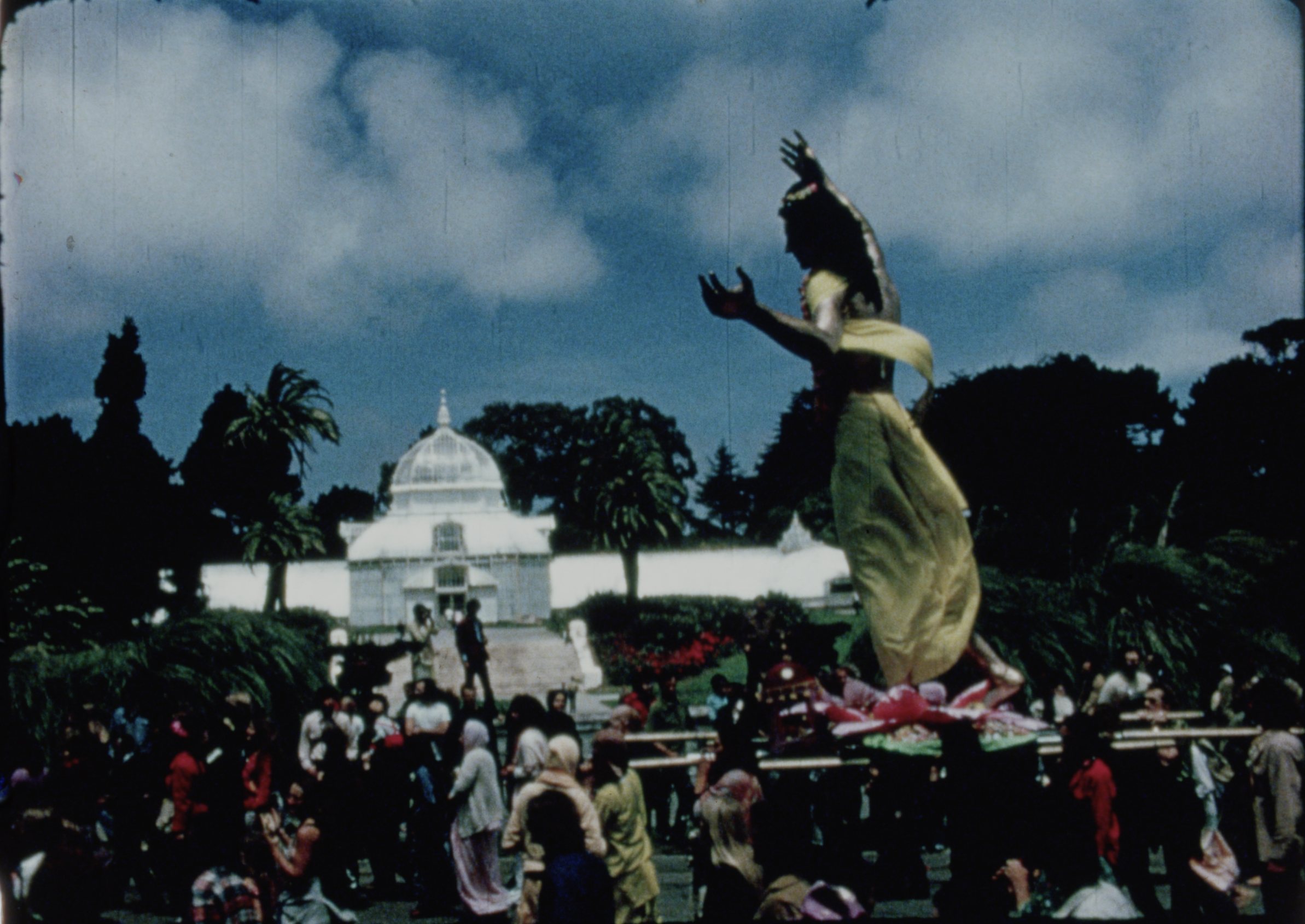
Warren Sonbert described RUDE AWAKENING as being “about Western civilization and its work; activity ethic and the viability of performing functions and activities.”
“The incorporation of the materiality of film, the treatment of light, and the use of a hand-held camera, all suggest the influence of Stan Brakhage (Sonbert's ‘hero’). Sonbert's use of the shot as the foundation of his silent montage works parallels the use of the frame as the basic filmmaking unit in the films of Gregory Markopoulos (Sonbert's ‘mentor’).” —Jon Gartenberg
DIVIDED LOYALTIES (1978)
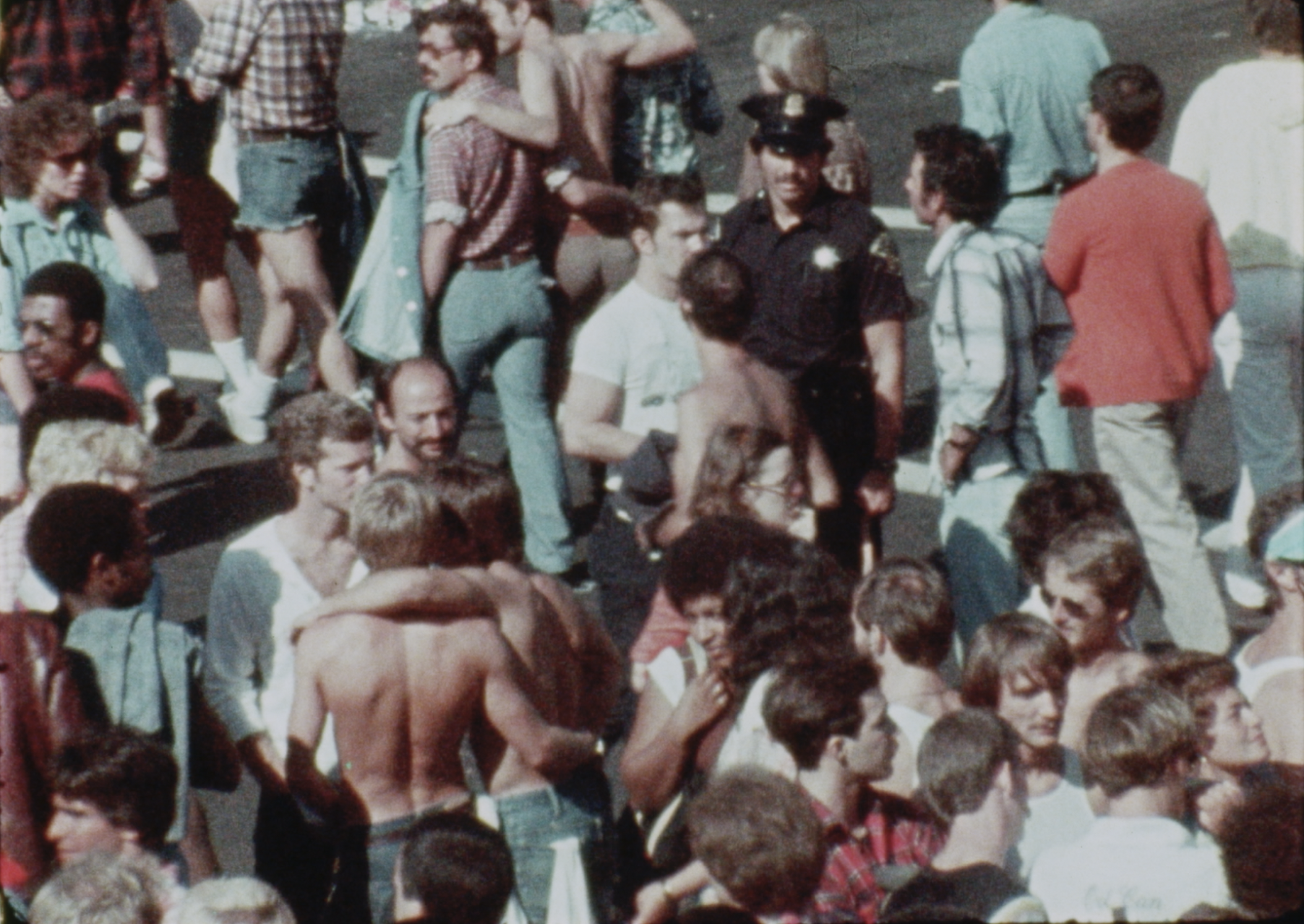
Warren Sonbert described DIVIDED LOYALTIES as a film “about art versus industry and their various crossovers.” According to film critic Amy Taubin, “there is a clear analogy between the filmmaker and the dancers, acrobats and skilled workers who make up so much of his subject matter.”
“DIVIDED LOYALTIES limns the polarities of Warren's universe, both social and filmic (the image and the cut; the narrative and the formal).” —Paul Arthur, Millennium Film Journal