


Broughton & Singer
/
“Adventure, not predicament, was his main motto.” —Joel Singer, on James Broughton
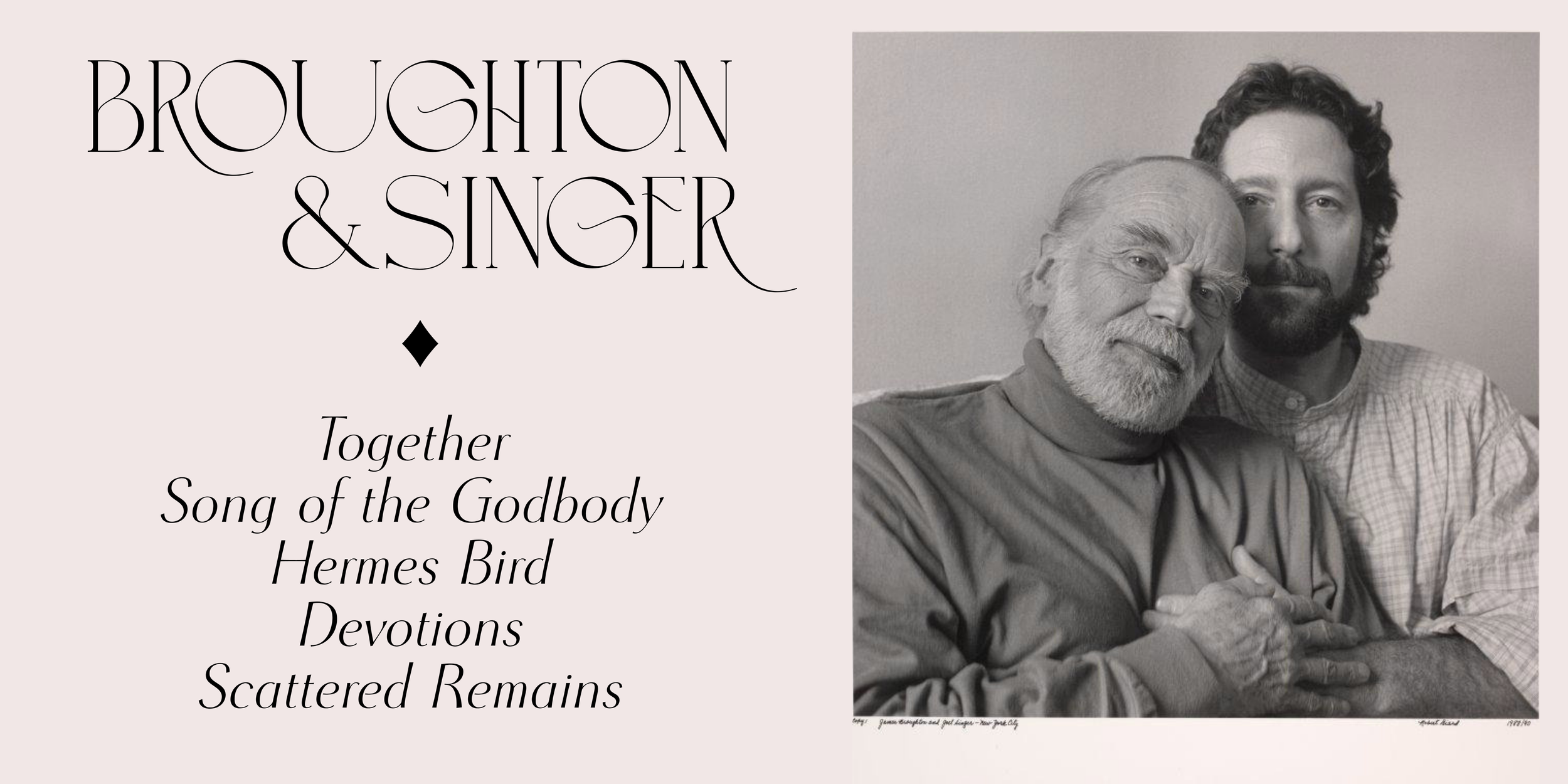
Joel Singer was born in Montreal, Canada, in 1948; coincidentally, the same year James Broughton made his solo directorial debut with MOTHER’S DAY. Fascinated by the visual arts from a young age, Singer worked for a family-owned furniture business for several years before venturing into ceramics and, eventually, cinema. In the early 1970s, the burgeoning artist relocated to the United States to immerse himself in the avant-garde film scene of the period. He met and fell in love with Broughton in 1974 while auditing one of his classes at the San Francisco Art Institute. As noted by Singer: “I married my guru, and we spent the next fifteen years in the Bay Area sharing fully in art and life. We collaborated on seven films, mostly celebrations of our loving relationship as well as our artistic vision, and I helped design several volumes of his poetry.”
Broughton’s personal and creative partnership with Singer marked a turning point in his life. In 1974, Broughton was in the process of finishing TESTAMENT, which he intended to be his final film. Yet, upon meeting Singer, Broughton believed him to be the reincarnation or manifestation of “Hermy,” the “angel/muse” that visited him when he was three years old and prophesied his life as a poet.
Two years later, Singer proposed that Broughton be the subject of an experimental film portrait. The resulting film, TOGETHER, consists of two disparate images of Broughton’s visage — captured by Singer on high-contrast, black-and-white, 16mm film — slowly conjoining from opposite sides of the screen via rapid frame-by-frame intercutting. The title TOGETHER thereby literalizes Singer bringing together two separate images of Broughton’s face, while denoting the moment in Broughton’s and Singer’s lives in which they would consistently work together until Broughton’s death.
The ensuing decade marked a creatively fertile period for Broughton and Singer as they collaborated on six films that celebrated not only their relationship but joy, pleasure, queerness, the body, and community at large. Broughton once remarked, “I believe in ecstasy for everyone,” and the films he made with Singer in the third and final act of his career reify this outlook. These films also coincide with Broughton and Singer’s involvement with the Radical Faeries and the Sisters of Perpetual Indulgence. These were two countercultural artist/activist groups founded in 1979 and devoted to queer consciousness, community-building, and secular spirituality.
From the sensual and virtually microscopic exploration of Broughton’s body in 1977’s SONG OF THE GODBODY, to the time-lapse imagery of Singer’s erection in 1979’s HERMES BIRD, the homoerotic camaraderie of 1983’s DEVOTIONS, and Singer’s loving portraiture of Broughton in 1988’s SCATTERED REMAINS, these films exemplify Broughton’s childhood realization that “the world was not a miserable prison. It was a playground for a nonstop tournament between stupidity and imagination. If I followed the game sharply enough, I could be a useful spokesman for Big Joy.”
In 1989, Broughton and Singer moved to the Pacific Northwest and resided there until Broughton’s passing in 1999. During this period, Singer became part of an artist’s cooperative gallery and worked extensively in photographic collage (or “photage”). Singer eventually relocated to Greenwich Village, before moving to Bali full-time in 2009 and continuing to work in photage and filmmaking.
GME is pleased to present TOGETHER, SONG OF THE GODBODY, HERMES BIRD, DEVOTIONS, and SCATTERED REMAINS in a curated package, titled Broughton & Singer, which is devoted to James Broughton’s and Joel Singer’s personal and creative partnership. SONG OF THE GODBODY was featured in Jon Gartenberg’s program James Broughton, Cinema Poet, which screened at The Museum of Modern Art on July 6 and July 10, 1979.
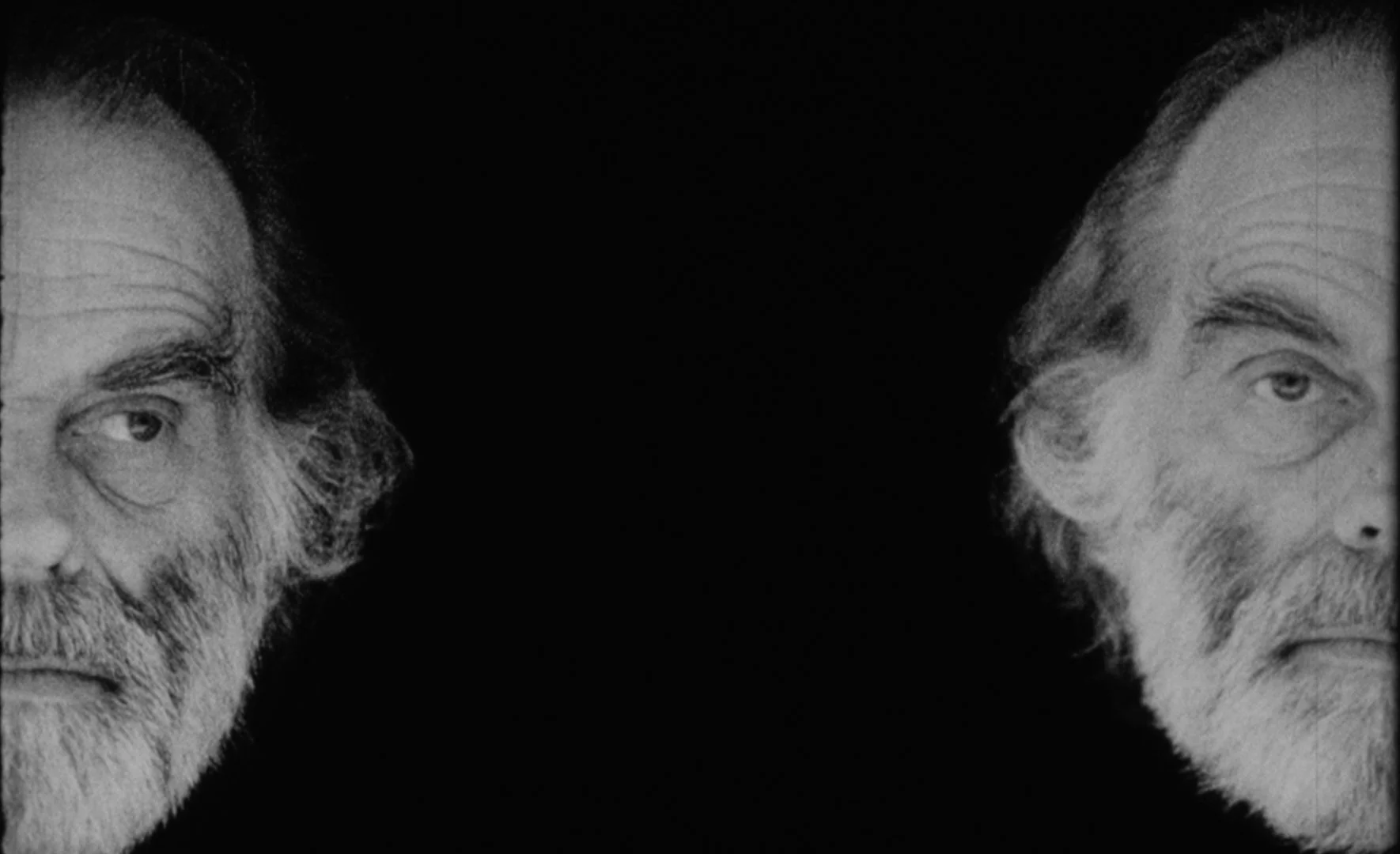
TOGETHER (1976)
A single-frame portrait of Broughton's disembodied heads coming slowly together in wiggle, wobble and wonderment.
altogether wholly in toto in toto / in totally toto together altogether / together —James Broughton (from the film’s soundtrack)
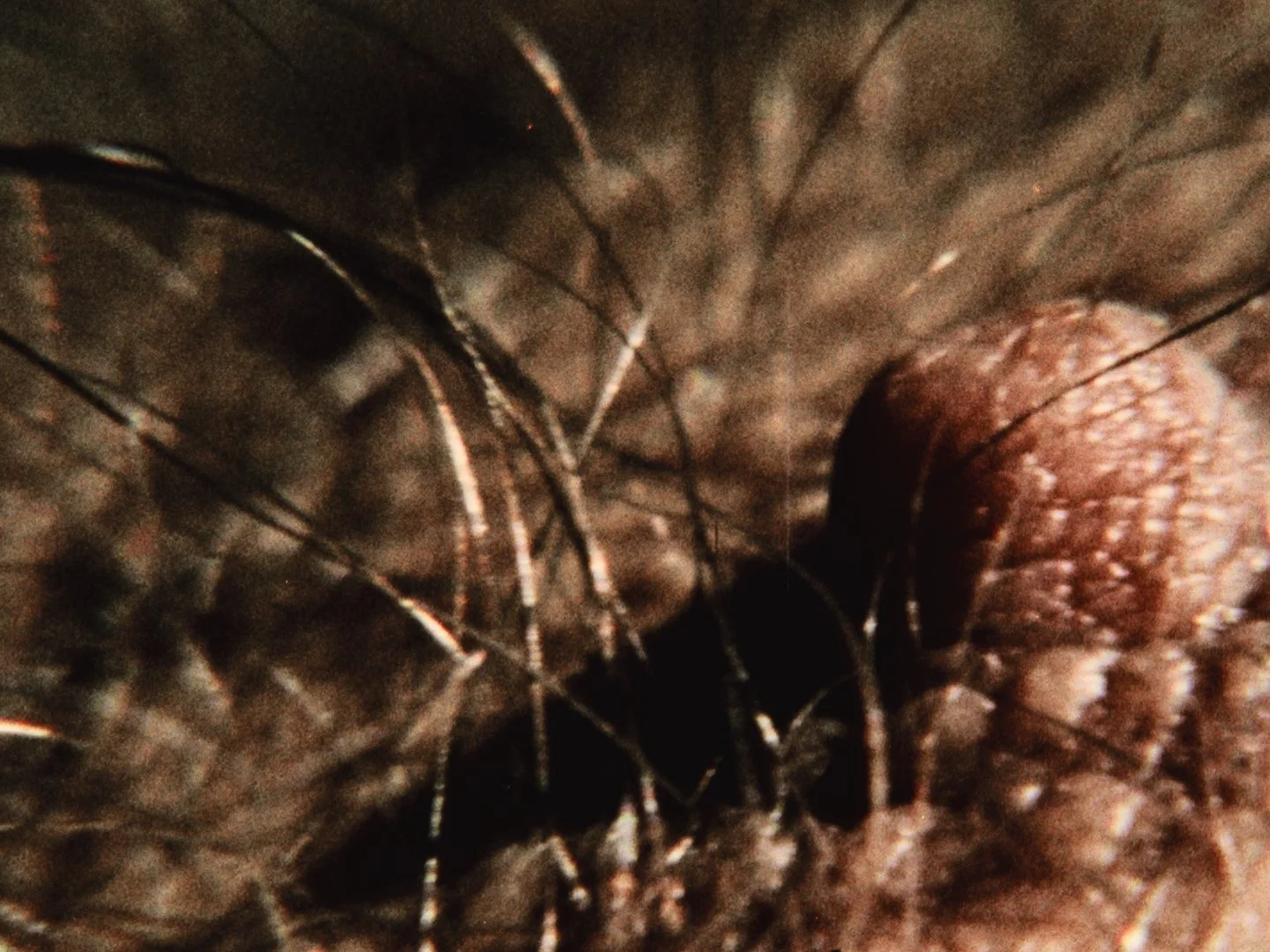
SONG OF THE GODBODY (1977)
“The film consists predominantly of extreme close-ups of parts of Broughton's body. The camera slowly becomes the tool revealing the erotic beauty of the body and the sensual pleasure in loving oneself. The ecstasy and power of sexual gratification are celebrated by the camera, as it maintains an erotic role, probing, revealing and visually caressing. Broughton's song is a praise of his body as divine androgyne, and an acceptance of this higher godly sexual power.” —Richard Bartone, Millennium Film Journal
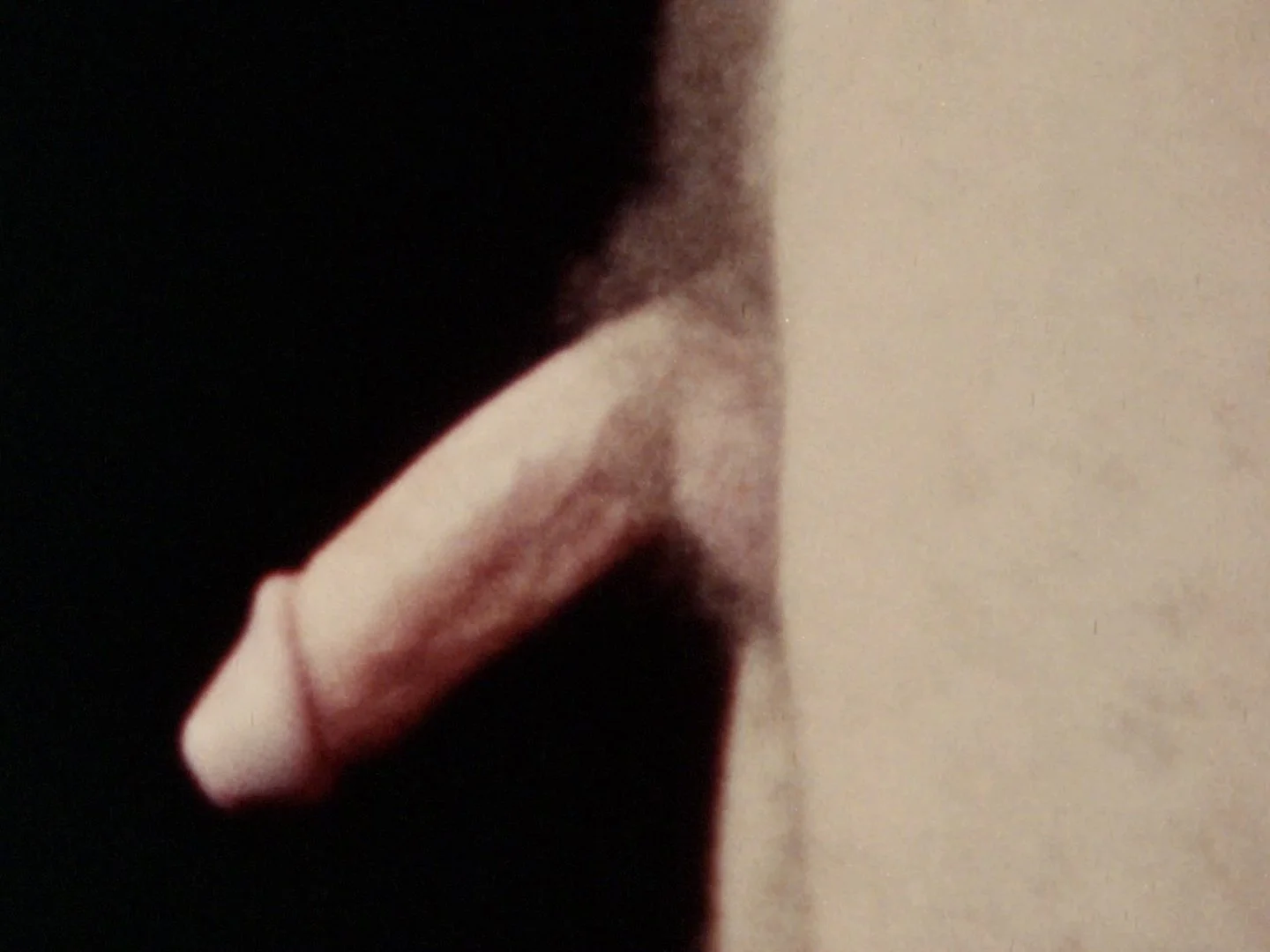
HERMES BIRD (1979)
“HERMES BIRD is a celebration and an apotheosis of the masculine miracle: the transformative powers of the phallus, revealed as a phenomenon of glowing beauty and wonder.” —James Broughton
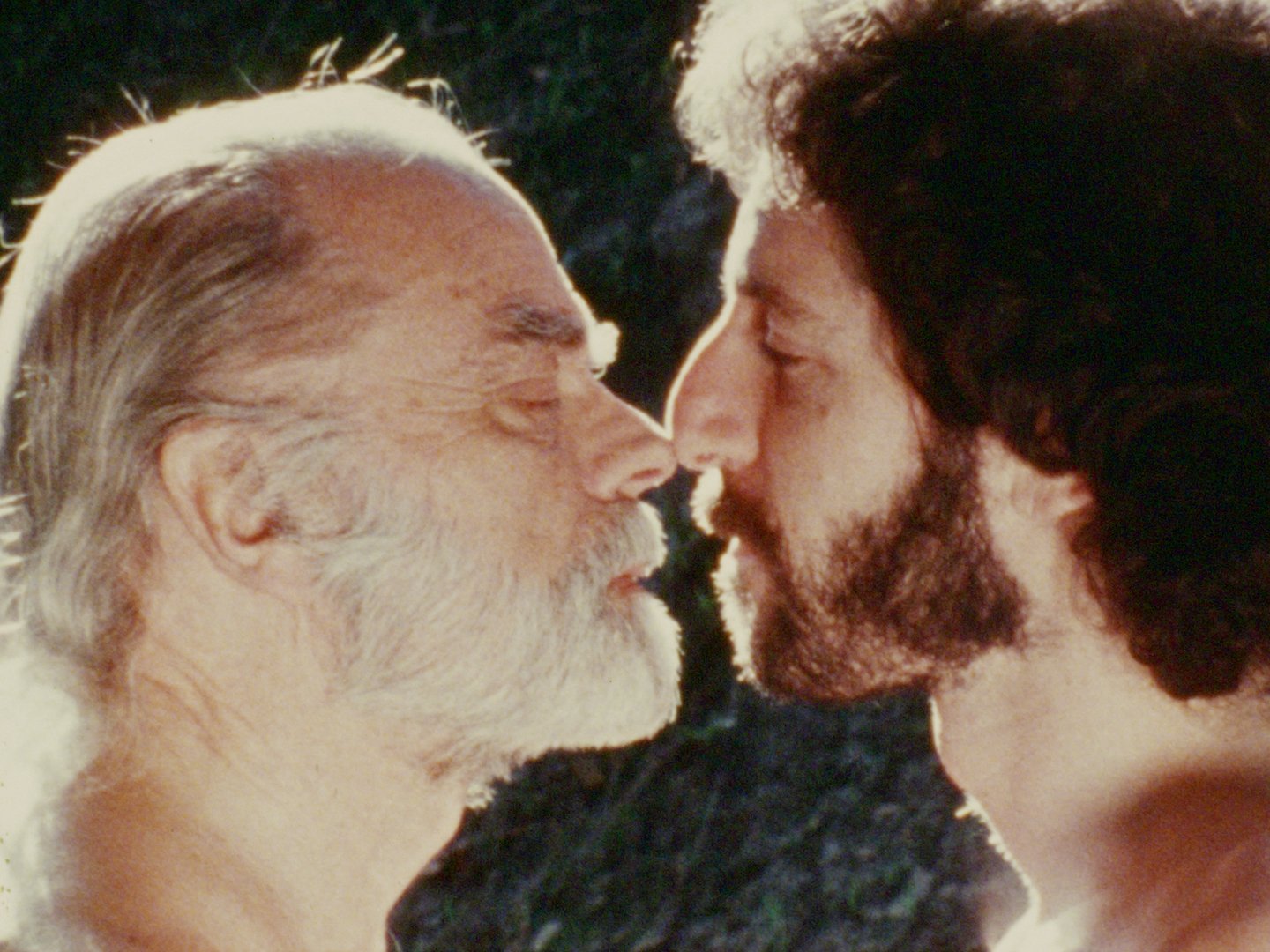
DEVOTIONS (1983)
DEVOTIONS is the vision of a world where men have forsaken rivalry and taken up affection, thereby creating a society that relishes a variety of comradely devotions.
The film takes delight in observing the friendly things men can do together, from the odd to the rapturous, from the playful to the passionate. These events appear in a series of cameo duets performed by men of all ages and appetites.
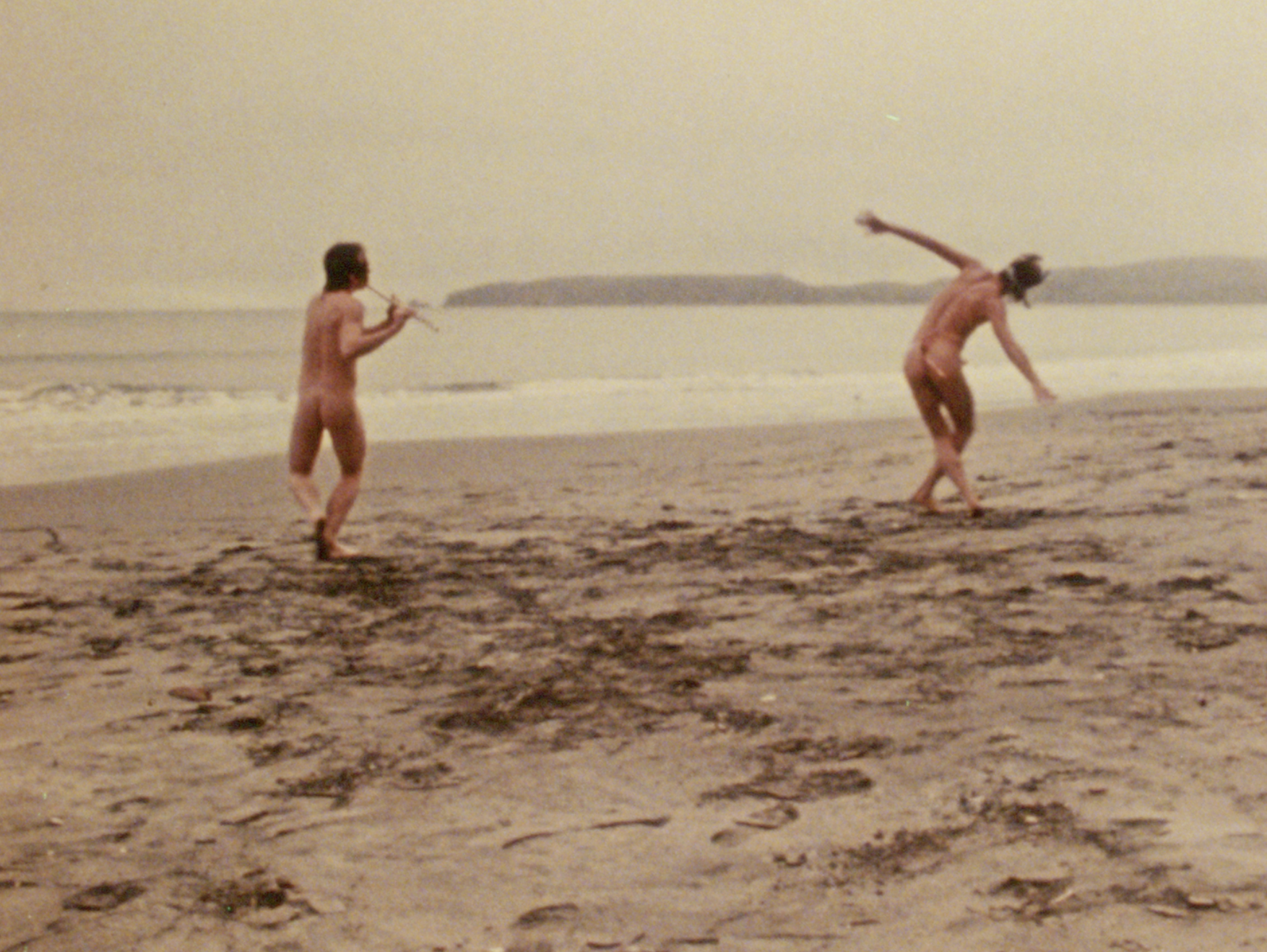
SCATTERED REMAINS (1988)
SCATTERED REMAINS is a cinematic performance piece enlivened by its experiments in poetic speech and poetic vision. Joel Singer creates a multi-faceted portrait of James Broughton acting out his verses within unlikely situations and surprising camera inventions. In the course of this divertissement the poet probes the puzzlements of mortality, destiny and the magic of language.
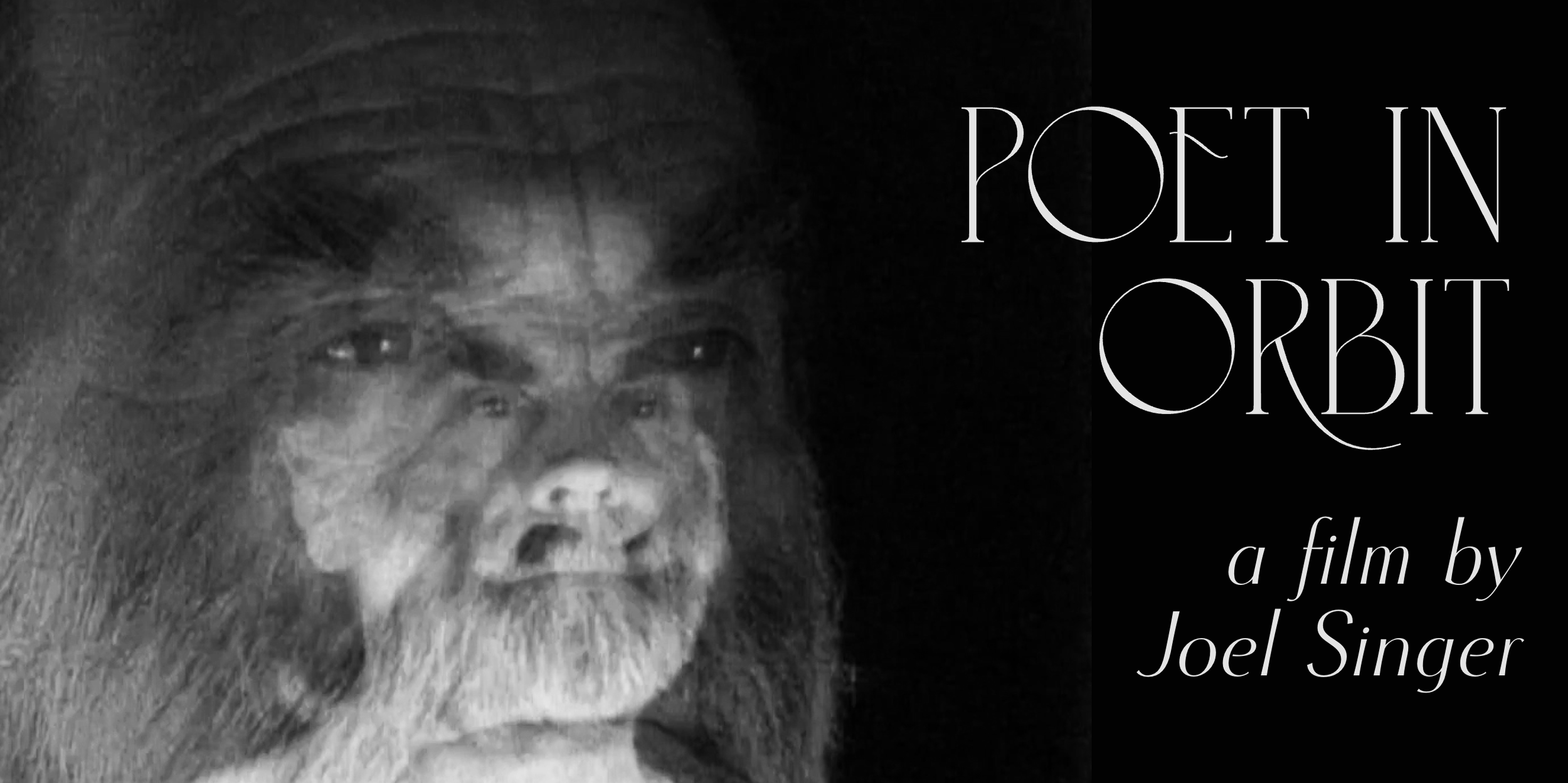
In addition to the aforementioned titles by James Broughton and Joel Singer, GME is pleased to present Singer’s rarely-screened solo work POET IN ORBIT (1980), which features 16mm footage of Broughton. POET IN ORBIT was selected for the September 2026 inaugural exhibition at the George Lucas Museum in Los Angeles, California.
Singer’s film is now available from GME for rental and purchase by academic and cultural institutions worldwide. It also streams for free in the Adrienne Mancia Streaming Room throughout the month of October.
Click here to learn more information about POET IN ORBIT.
For rental or purchase queries regarding additional titles by James Broughton and Joel Singer (listed below), please contact sales@gartenbergmedia.com:
WINDOWMOBILE (1977)
SHAMAN PSALM (1981)
THE GARDENER OF EDEN (1981)