

Dance Archives
GME has developed strategies for archiving the work of dance choreographers and photographers. The physical manifestations of their creative process comprise notebooks and sketches, moving image recordings, photographs, programs of performances, and other relevant ephemera. Our objective is to further the legacy of these artists by helping to implement a cataloguing system that mirrors their working method, situating their body of work within a larger artistic and historical context, and identifying organizations to store, preserve, exhibit, and promote research use of the diverse elements that comprise these collections. GME has worked with the archives of choreographer Trisha Brown and multimedia artist Cathy Weis, in addition to the archive of the Dance Theatre of Harlem.
Trisha Brown

Trisha Brown in set and reset Photo by chris Callis, 1996
Trisha Brown Dance Company has presented the work of its legendary artistic director for over 40 years. Founded in 1970 when Trisha Brown branched out from the experimental Judson Dance Theater to work with her own group of dancers, TBDC offered its first performances at alternative sites in Manhattan’s SoHo. Today, the Company is regularly seen in the landmark opera houses of New York, Paris, London, and many other theaters around the world. The repertory has grown from solos and small group pieces to include major evening-length works and collaborations between Ms. Brown and renowned visual artists.
When Brown retired as head of her company, she appointed longtime members Diane Madden and Carolyn Lucas as Associate Artistic Directors. Madden and Lucas were charged with developing, deepening and expanding the company’s educational initiatives; presenting Brown’s dances in a variety of spaces; and treating the company’s archive as a living organism to be used to better understand Brown’s work in particular, and dance in general.
The archive includes performance and rehearsal footage, Brown’s notebooks, and sets, costumes, and scores by some of the pre-eminent artists of the era. Jon Gartenberg has worked as a consultant with Executive Director Barbara Dufty and Archive Director Cori Olinghouse to help place Trisha Brown’s archive. This led, in September 2020, to the archive being placed with the Jerome Robbins Dance Division of the New York Public Library for the Performing Arts. Read the article in The New York Times, here.
“Storytelling in the Archive” – Excerpt from Cori Olinghouse presentation at MOMA on October 27, 2015, referencing Jon Gartenberg’s approach to archiving the legacy of creative artists. Also see mention of Gartenberg in Brooklyn Rail interview with Olinghouse, here.
Cathy Weis

Cathy Weis in Dummy
Photo by Richard Termine, 1999
The Cathy Weis Archive contains hundreds of hours of footage of Weis’ work as a performance videographer in New York City from 1983 through to the present day. Weis approaches her documentary work with a choreographer’s eye, capturing not merely the spatial records for the purpose of
restaging the choreography, but the nuances of performance usually lost in conventional recording. Documenting many rare and improvisational performances by emerging and established artists, as well as discussions, informal gatherings, and outdoor scenes, Weis has produced an archive that is a unique record of dance and performance from an eclectic and dynamic period in history. The archive is not only an invaluable resource for the creative processes of dancers, performers, and artists, but also for dance historians and educators.
Preserving and cataloguing the holdings of the archive is a major and ongoing initiative of Cathy Weis Projects. With the consent of the artists represented, excerpts will ultimately be made accessible to artists, performers, students, scholars, and critics all over the world. Weis’ latest creative project, Look Into the Past with Madame Xenogamy, is an initial way the public can engage with some of the archive’s rare and historic footage.
Recognizing a critical need for the preservation of the tapes, in early 2003, Weis engaged Gartenberg Media Enterprises. With GME’s help, Weis developed a customized and comprehensive catalogue with standardized nomenclature for the diverse camera positions and points of view represented in the recorded imagery, and of all creative, intellectual, and technological information related to each work. The digitization and cataloging of the archive’s holdings remains an ongoing project.
Dance Theatre of Harlem
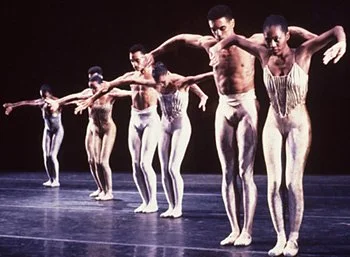
DANCE THEATER OF HARLEM, PERFORMING DIALOGUES in 2006. SOURCE: WIKIMEDIA COMMONS.
Dance Theatre of Harlem was founded in 1969 by Arthur Mitchell, who was the first African-American dancer with the New York City Ballet, and who believed that “ballet belongs to everyone.” Dance Theatre of Harlem is recognized as the first African-American classical ballet company and the first major dance company to prioritize Black dancers. Notable performers who have trained with Dance Theatre of Harlem include Karen KB Brown, Michaela DePrince, Virginia Johnson, Mel Tomlinson, Eric Underwood, Stephanie Dabney, and current Artistic Director, Robert Garland.
An 18-member, multi-ethnic company, Dance Theatre of Harlem tours nationally and internationally to present a repertoire that includes treasured classics, neoclassical pieces, and innovative contemporary works. GME was honored to engage with Dance Theatre of Harlem from November 2023 to February 2024 as consultants for their extensive photography collection, including images and ephemera pertaining to Arthur Mitchell himself.
Please contact info@gartenbergmedia.com for more information about these archives or to inquire about dance collections consultations.