


Early Films by James Broughton-
/
“Cinema saved me from suicide when I was 32 by revealing to me a wondrous reality: the love between fellow artists.” —James Broughton
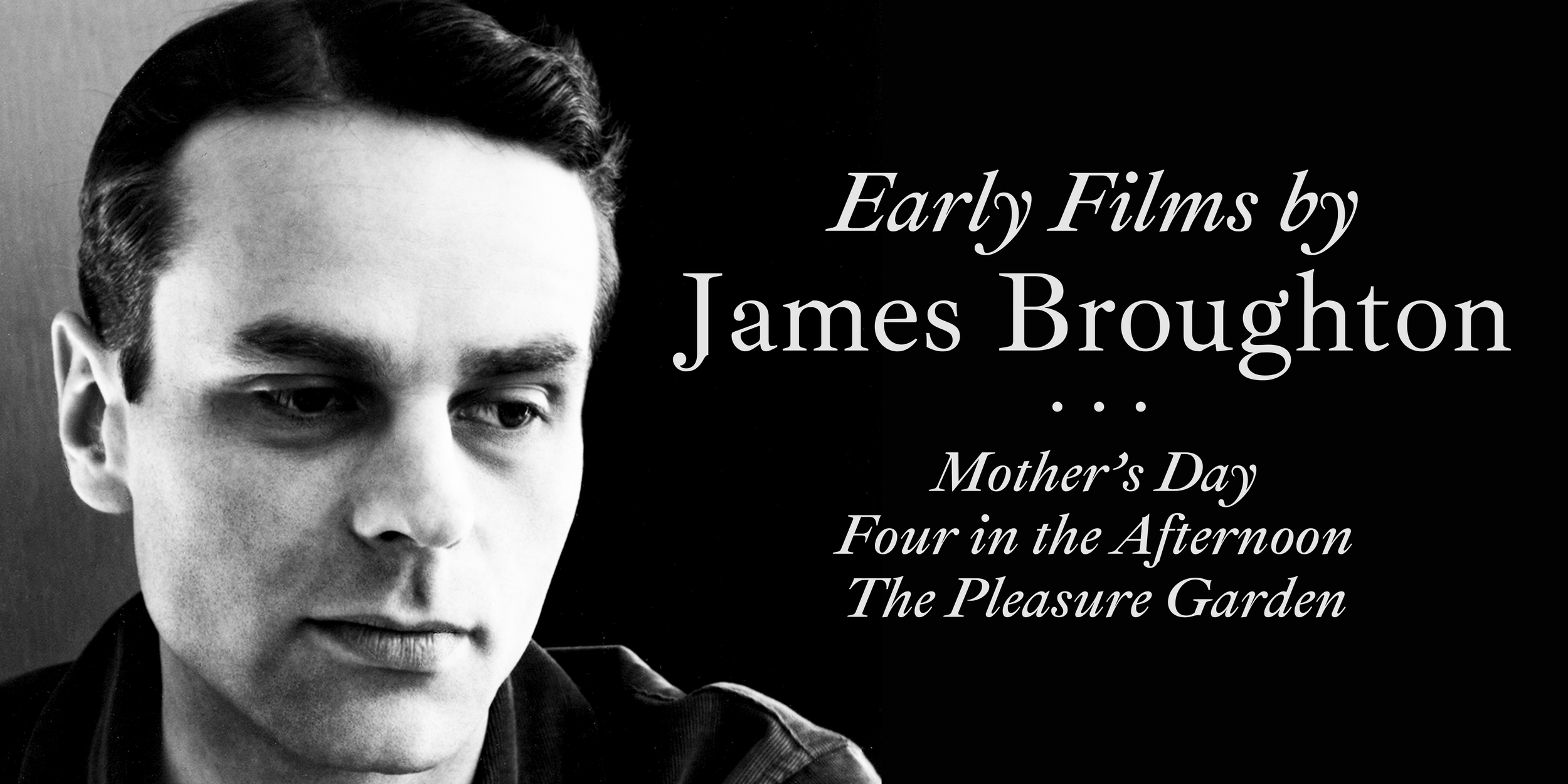
James Broughton was born in 1913 in Modesto, California. At the age of two, his family relocated to San Francisco, where he spent much of the rest of his life. At the age of three, he met “Hermy,” his self-described “angel/muse” who encouraged him to become a poet. Broughton followed his muse and eventually became an integral figure in the San Francisco Renaissance. This scene was widely considered the key precursor to the Beat poets, and consisted of such notable artists, writers, and performers as Sidney Peterson, Kenneth Rexroth, Madeleine Gleason, Robert Duncan, Alan Watts, Anna Halprin, and Pauline Kael (with whom Broughton had a daughter, Gina, born in 1948).
By Broughton’s own admission, his discovery of cinema in his early thirties, as a means of personal expression and community-building, saved his life. This revelation led to his 1946 collaboration with Sidney Peterson: the 18-minute film THE POTTED PSALM. Two years later, Broughton directed his first solo film, MOTHER’S DAY (1948), which was described by film critic and historian Arthur Knight as “an ironic camera exploration of the artist’s world of memory, imagination and perception.” Peter Kubelka later called MOTHER’S DAY “one of the great films in film history.”
Over the next five years, Broughton would craft a series of humorous, at times fantastical, and often playfully anti-authoritarian films that earned him the reputation of “the father of West Coast experimental cinema.” His filmmaking was imbued with his poetic practice, which was described by the Poetry Foundation as using “accessible language and sly humor to explore themes of sexuality, mysticism, and a personal mythology, often borrowing structurally from nursery rhymes and children’s songs.”
GME is pleased to present 1948’s MOTHER’S DAY alongside 1951’s FOUR IN THE AFTERNOON and the artist’s crowning achievement from this early period, 1953’s THE PLEASURE GARDEN, in the curated package Early Films by James Broughton. Both FOUR IN THE AFTERNOON and THE PLEASURE GARDEN were featured in Jon Gartenberg’s program James Broughton, Cinema Poet, which screened at The Museum of Modern Art on July 6 and July 10, 1979.
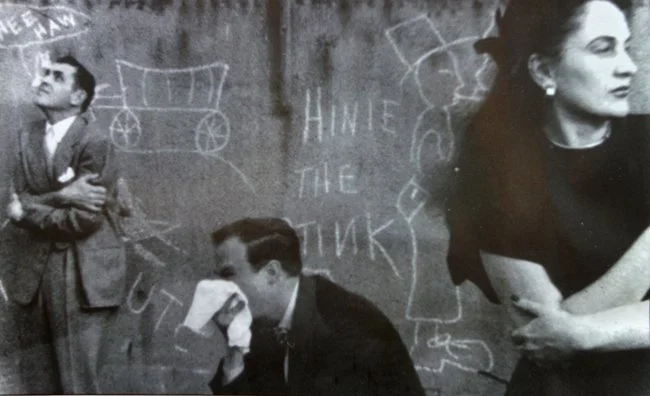
MOTHER’S DAY (1948)
One of the first major works of the San Francisco film movement, MOTHER’S DAY is a painfully humorous recollection of childhood in which a family of singular adults recreate their infancy by behaving as they did when growing up.
"Humorous, satirical, and overwhelmingly skillful, this ironic camera exploration of the artist's world of memory, imagination and perception is among the finest, most challenging films yet produced in this country." —Arthur Knight
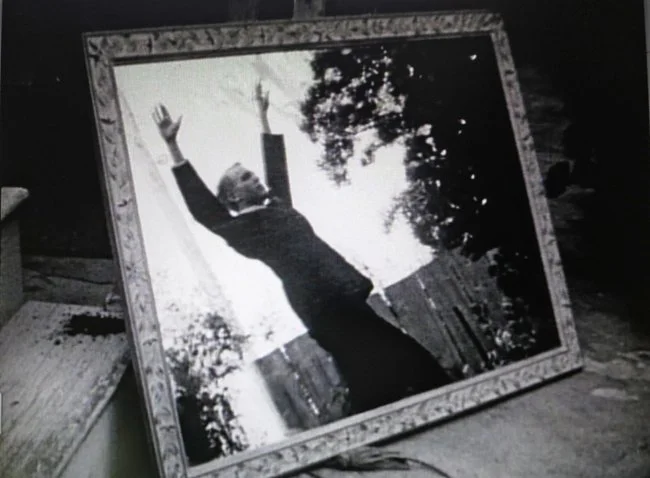
FOUR IN THE AFTERNOON (1951)
Four poetic variations on the search for love; four odd characters living out their daydreams: Game Little Gladys, The Gardener's Son, Princess Printemps, and The Aging Balletomane. Based on Broughton's own poems, this film ranges from the farcical to the elegiac in its amalgamation of image, music and spoken verse.
“The best poetry film ever made.” —Willard Maas
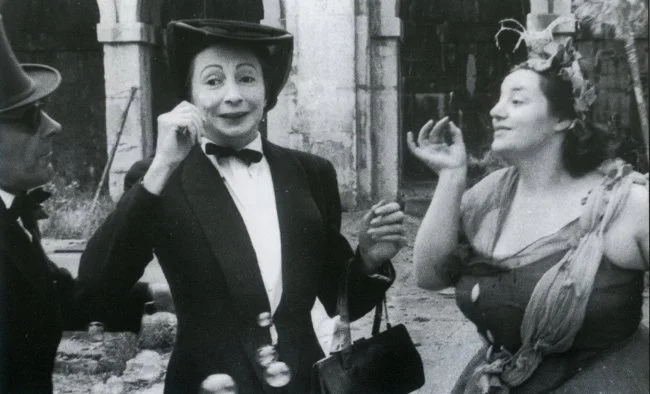
THE PLEASURE GARDEN (1953)
A joyous musical fantasy celebrating “Love in the Park” and “the victory of the pleasure principle over all prudes and killjoys,” THE PLEASURE GARDEN was made in London and shot in the ruined gardens of the Crystal Palace. Winner of the Prix de Fantasie Poetique at the 1954 Cannes Film Festival, it is now widely regarded as the crowning achievement of Broughton’s early career.
“It's on the side of the angels. It's a great testimony for Love.” —Allen Ginsberg