
Now Playing in the Adrienne Mancia Streaming Room: THE SOMATIC LENS: Four Short Films for Women's History Month
/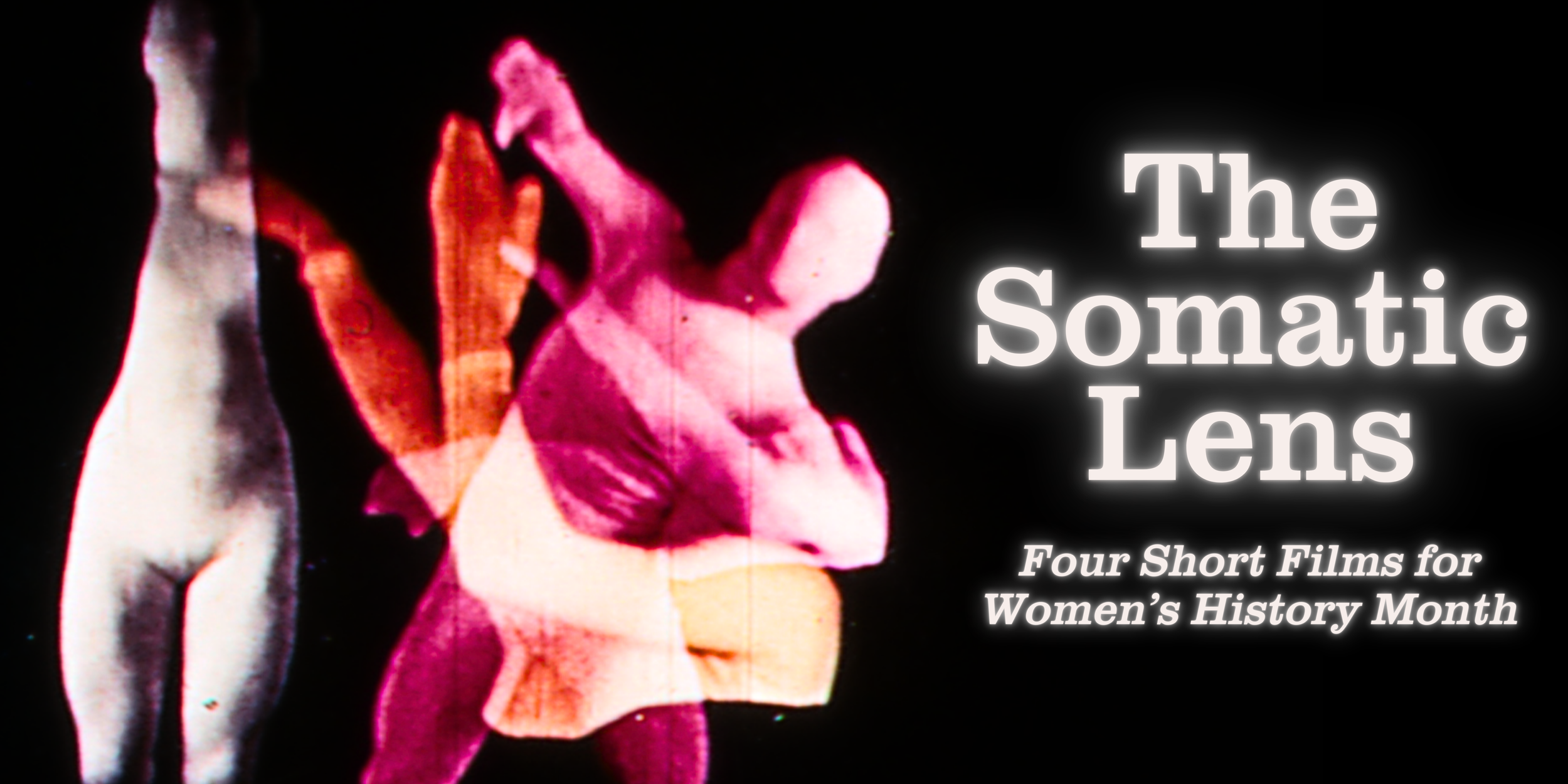
On the occasion of Women’s History Month in March, GME is pleased to present four short films by pioneering women filmmakers that foreground the human body, particularly within the context of dance and movement.
We are honored to show these films in the Adrienne Mancia Streaming Room. Mancia, a legendary exhibition curator at MoMA, spent her career championing the work of such female cineastes as Shirley Clarke, Agnès Varda, and Maya Deren. Deren’s late-1950s presentation of her magnum opus MESHES OF THE AFTERNOON (1943) proved a particularly formative experience for Mancia. Therefore, we offer Deren’s final work, the dreamlike dance film THE VERY EYE OF NIGHT (1959), alongside rare behind-the-scenes footage of Deren shooting the film, as seen in an excerpt from Martina Kudláček’s 2001 documentary IN THE MIRROR OF MAYA DEREN. We are also pleased to present INTROSPECTION (1941), the debut film of a long-overlooked contemporary of Deren’s, Sara Kathryn-Arledge. Finally, we offer Stella Simon’s vanguard 1927 short HANDE, made in collaboration with Miklos Bandy.
“Meshes of the Afternoon made a huge impression on Adrienne when she first saw it. She went to a screening of the film in the late ’50s or early ’60s, at which Maya Deren presented the film. It might have been at Cinema 16. And it made a huge impression on her understanding of what it meant to do an independent film, what an artists’ cinema meant. Particularly how artists’ films and independent films could be liberating. She said… Deren was wearing black slacks and a very blousy white blouse that you could see through, so you could see Maya’s breasts through the blouse when she spoke to introduce the film. Adrienne said people were saying, ‘You can see her breasts!’ You know, whispering in the audience. And seeing the film after having Maya introduce it that way made a huge impression on her, in terms of the notion of making films being a liberation for the filmmaker and for the audience.” —Ron Magliozzi, MoMA curator