


DREAM SPHINX OPERA (US, 1974, Roger Jacoby)
/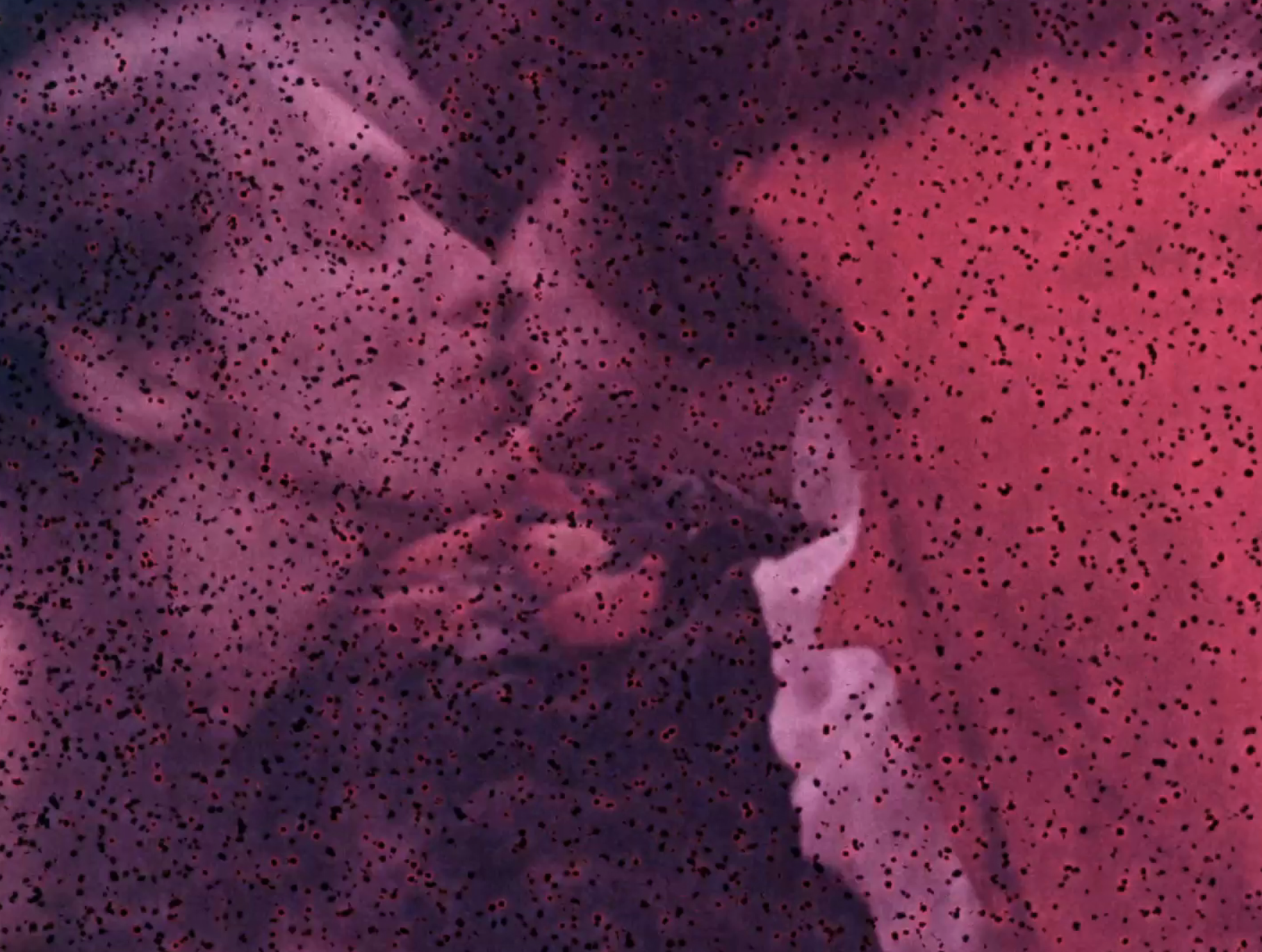
“DREAM SPHINX OPERA, starring Sally Dixon and Ondine, is perhaps his best-known film, an eight-minute piece complimented by the beautiful voice of Maria Callas... Jacoby’s signature hand-processing is a lovely compliment to Dixon and Ondine’s dancing and flirting in period clothing within Phipps Conservatory. Everything is playfully obstructed by emulsion.” —Dan Mecca, The Film Stage
STILL: DREAM SPHINX OPERA (1974).
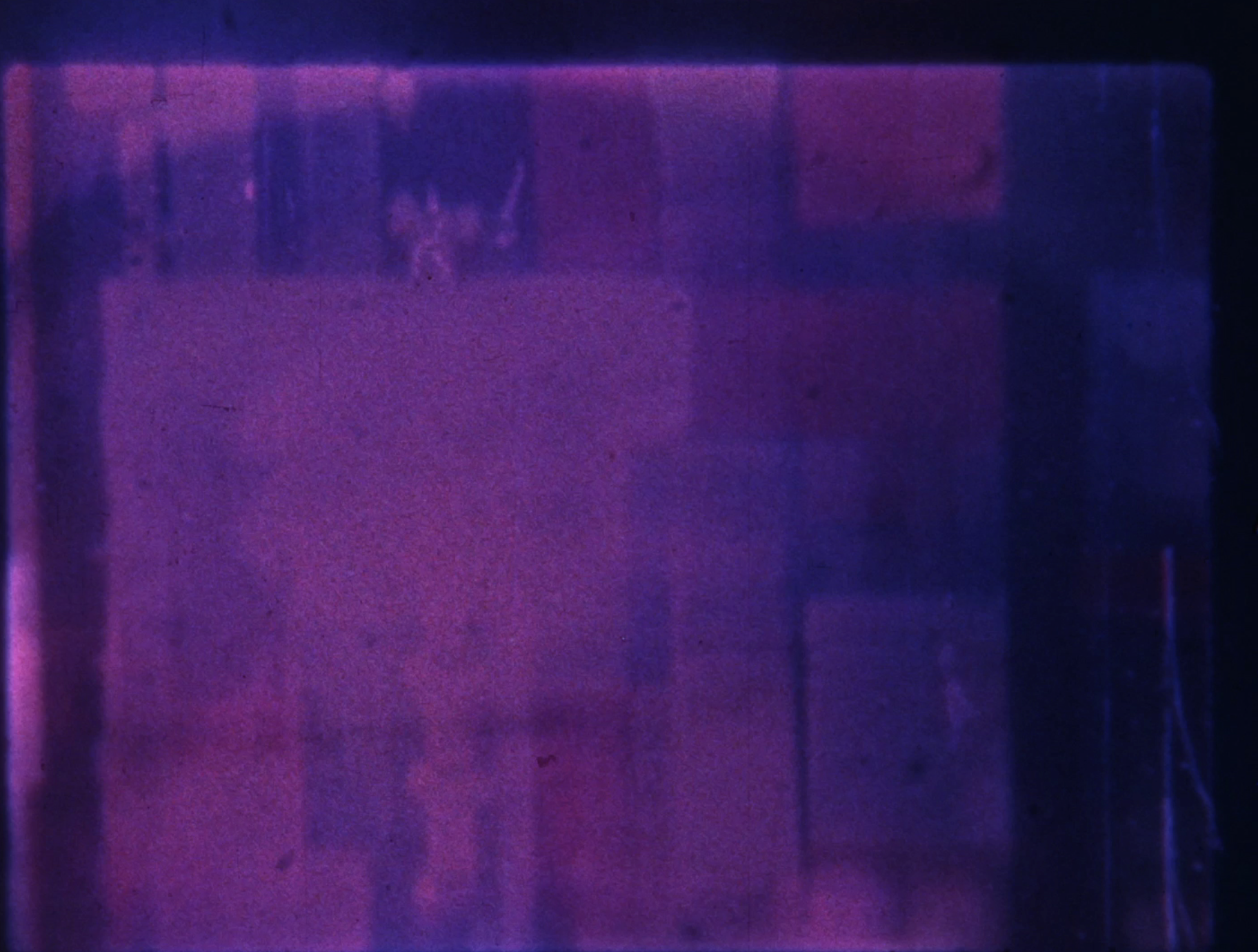
DREAM SPHINX OPERA, Roger Jacoby’s first hand-processed film, is an auspicious work boasting the qualities that would become trademarks of his oeuvre: lush colors, an emphasis on the materiality of film, and a heightened sense of play and grandiosity combined with a homespun intimacy.
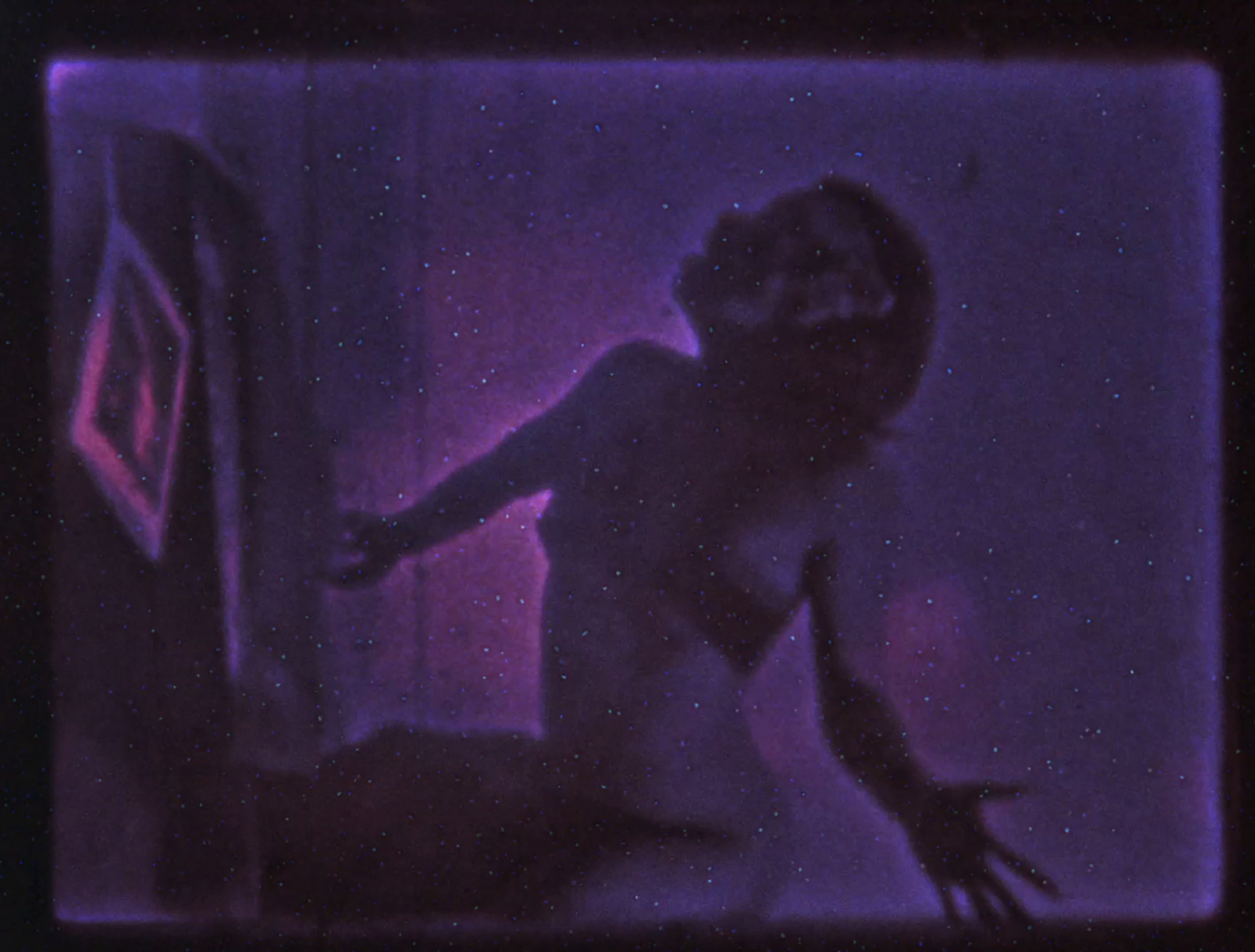
Following a series of glittery, handwritten titles that recall the kitschy glamour of Kenneth Anger’s PUCE MOMENT, DREAM SPHINX OPERA begins with gauzy Nickelodeon footage of a nude woman mugging for the camera with a flower in her hair. Jacoby permeates these images with dyes that bathe its subject in a mesmerizing rill of purples and pinks. These gaudy hues imbue, obfuscate, and transfigure the woman’s form. Once suffused with the heterosexual male gaze (the footage reads like an early stag film), Jacoby’s sumptuous stylization “queers” the footage, ultimately transforming its meaning and effect.
STILL: ONDINE AND SALLY DIXON IN DREAM SPHINX OPERA (1974).
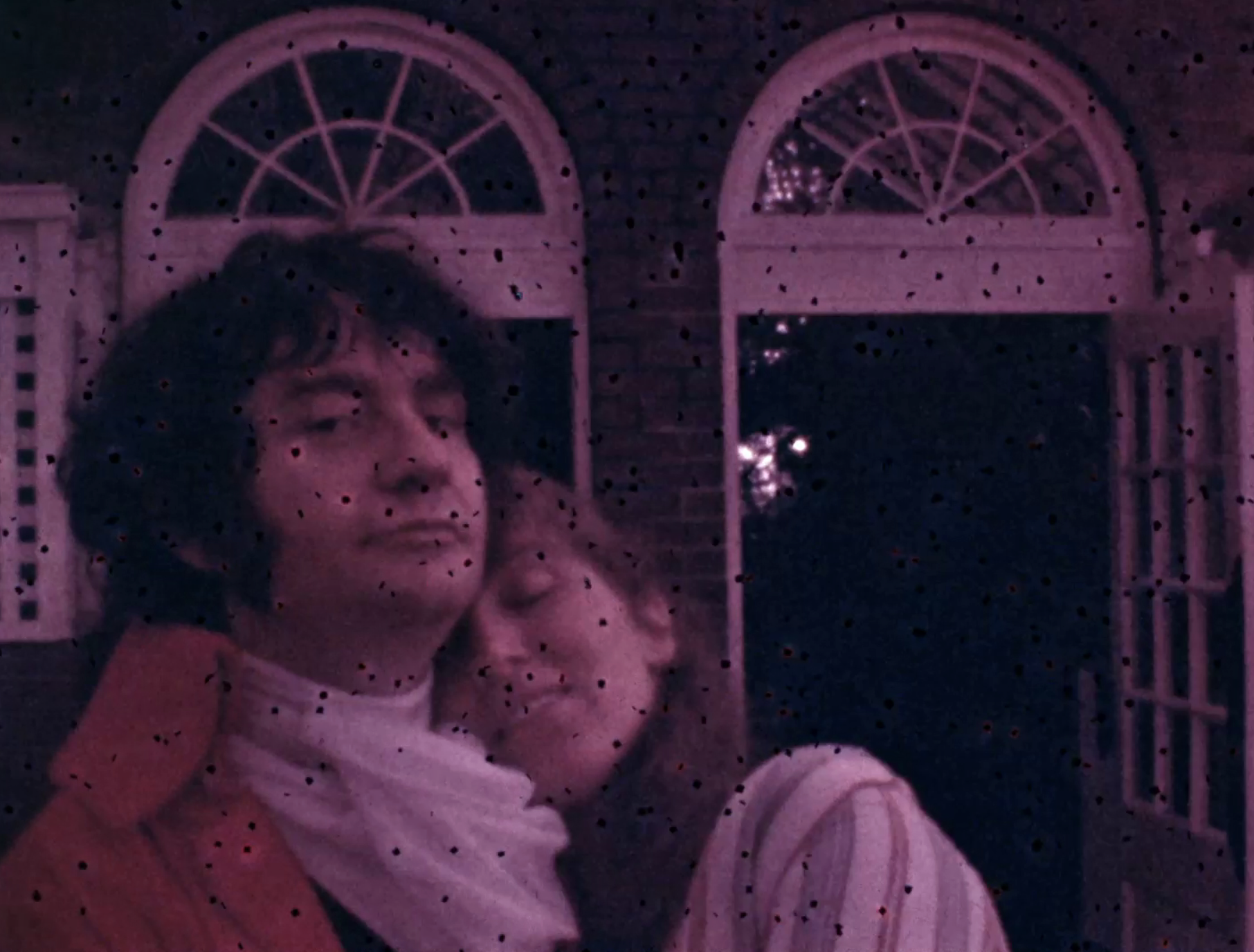
Jacoby’s subversive opening sequence segues into color footage of his then-partner Ondine and close friend Sally Dixon. The former is given “starring” credit while the latter is given “introducing” credit — another cheeky allusion to Hollywood conventions within an avant-garde context, à la Anger.
Donning 19th-century garb and underscored by Maria Callas singing “Una voce poco fa,” Ondine and Dixon canoodle, dance, kiss, and caress each other against the vernal backdrop of the Phipps Conservatory in Pittsburgh. As noted by poet and art critic Victoria Dalkey: “The strains of an aria rise, [and] the grainy specks of Jacoby’s self-processed film begin to dark and swim like fruit flies, lighting on the flowers in the garden, sticking to the lips of the lovers as they kiss.”
STILL: HAND-PROCESSED FOOTAGE OF AN UNIDENTIFIED NUDE WOMAN A NICKELODEON FILM IN DREAM SPHINX OPERA (1974).ROM
Jacoby shoots Ondine and Dixon in intimate and kinetic close-ups that emphasize the film’s warm, diaristic nature. This style contrasts effectively with the earlier footage of the nude woman, which registers as distant and voyeuristic in its stasis.
While the ensuing scenes with Ondine and Dixon are characterized by a sense of personal intimacy, there is nothing quotidian or mundane about the proceedings. On the contrary, Jacoby’s grainy, candy-coated film and the pace and vigor with which he captures his stars adds a heightened sense of drama and affection to his footage. Here, Jacoby seamlessly bridges diary filmmaking with performance. The results are indelible.
DREAM SPHINX OPERA
(US, 1974)
Director: Roger Jacoby
- 8 minutes
- Digital
- Color
- Sound
Distribution Format/s: DSL/Downloadable 1080p .mp4 file on server
Published By: GME
Classroom Price: $250
Institutional Price: Inquire
To order call: 212.280.8654 or click here for information on ordering by fax, e-mail or post.