


L'AMICO FRIED'S GLAMOROUS FRIENDS (US, 1976, Roger Jacoby)
/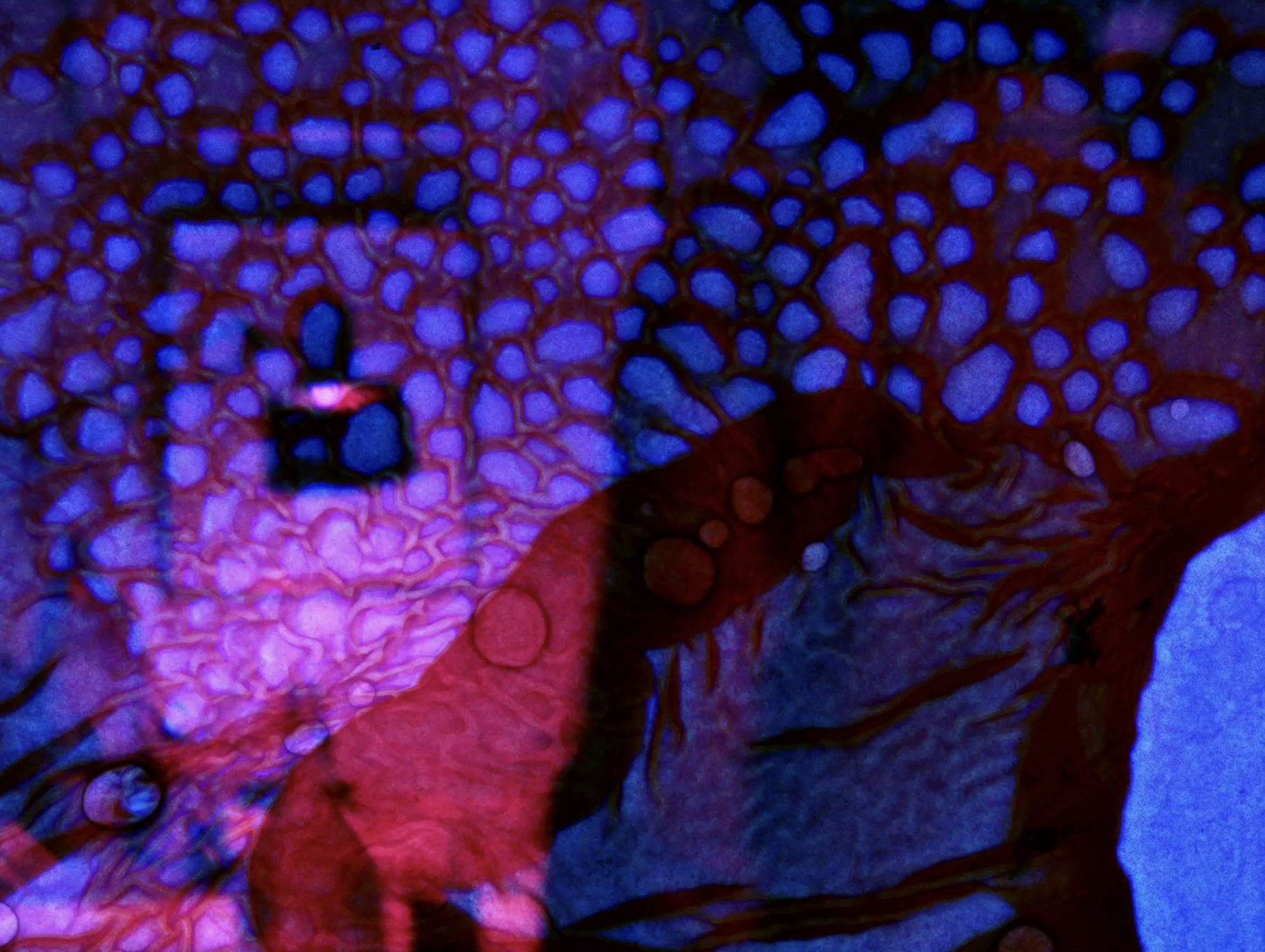
"In L'AMICO FRIED'S GLAMOROUS FRIENDS, which is built around a pas de deux by Ondine and Sally Dixon... the relationship to traditional dramatic narrative is rather obvious; the actors are in well-defined roles and are recognizable in them, and the films are as such accessible. More or less. And it is this more or less quality in which I am most interested; because the drama isn't the main object of his presentation, rather a component in Jacoby's total formal approach to film. There is the film grain. The sometimes lovely and sometimes not beautiful but nearly always exquisite collisions of light and shadow upon the screen which seduces us and takes us into a whole new world. And may as likely cause one to squirm in one's seat. With a quickness of breath and dryness of the throat one is apt to say 'What is that!' as if peering into some exotic fog, not sure if one may trust his own eyes. ... I think that the films of Jacoby are among the strongest in ... a post-structuralist trend toward the revitalization of the dramatic narrative, as his formal approach involves the subjective camera eye as well as the photochemical augmentation of the photographed image." —Carmen Vigil, Museum of Modern Art program notes, Field of Vision
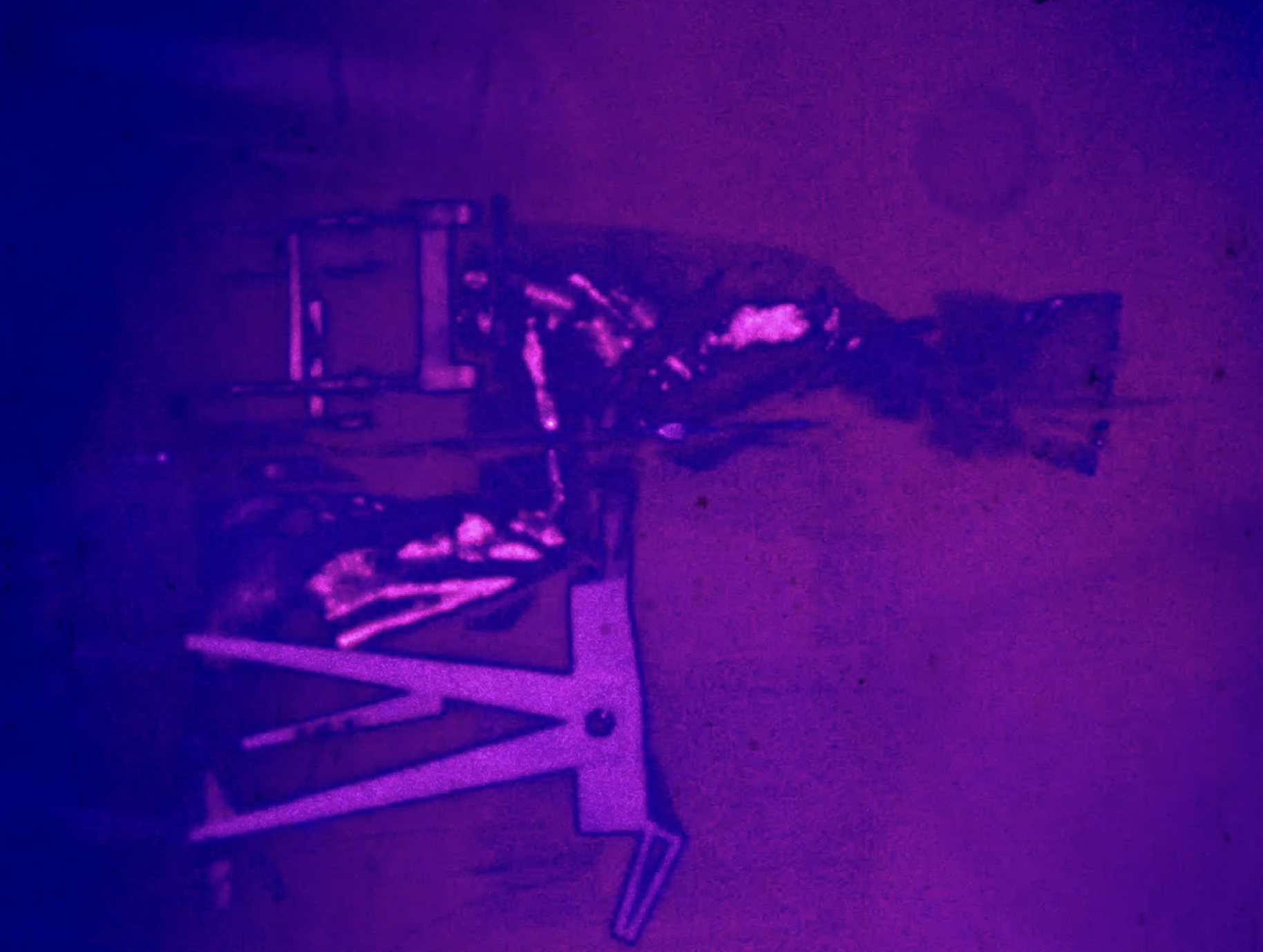
STILL: A KEYBOARDIST IN A METALLIC JUMPSUIT IN L’AMICO FRIED’S GLAMOROUS FRIENDS (1976).
Following 1974’s dazzling DREAM SPHINX OPERA, Roger Jacoby’s L’AMICO FRIED’S GLAMOROUS FRIENDS (1976) is a similarly lush, hyper-saturated, and borderline surreal work that bridges the painterly style of filmmakers like Marie Menken (a mentor of Jacoby's) with dynamic performances and allusions to dramatic narrative conventions.
The first section of L’AMICO FRIED’S GLAMOROUS FRIENDS consists of footage — shot at a horizontal, 180-degree angle — of a series of performers on stage. These include a cabaret singer, a belly dancer, a keyboardist swathed head-to-toe in a shimmering metallic jumpsuit with an indiscernible, space-age headpiece, and two performance artists engaged in a symmetrical dance.
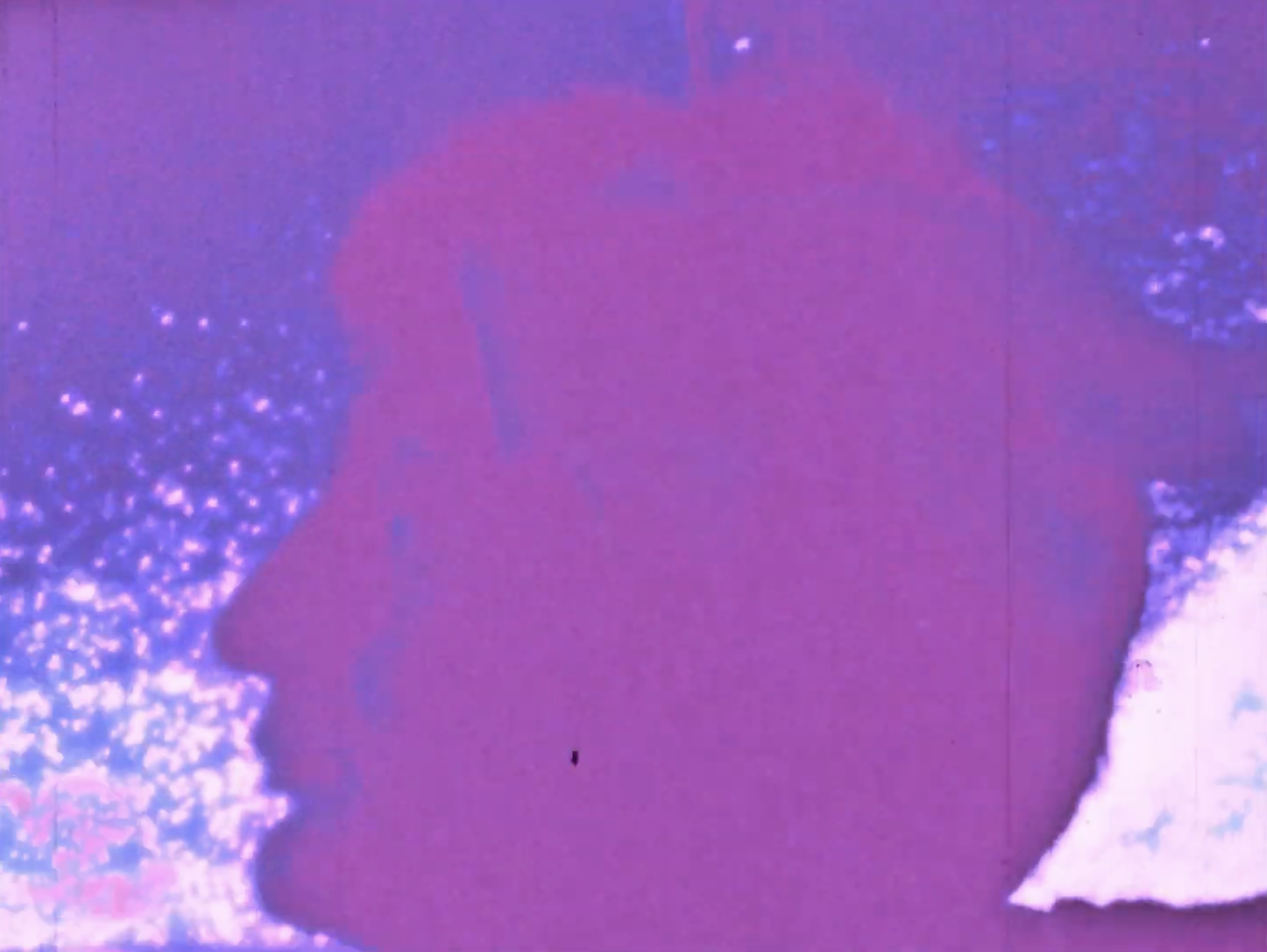
STILL: L’AMICO FRIED’S GLAMOROUS FRIENDS (1976).
As with the Nickelodeon footage in Jacoby’s earlier film, the elevated grain, texture, and pigments resulting from his hand-processing both abstract and augment his subjects. This technique conceals the performers’ facial expressions and accoutrements while revealing a deeper sensuality via the transfiguration of their bodies through Jacoby’s manipulation of color and texture. The psychedelic results are as dreamy as they are nightmarish.
L’AMICO FRIED’S GLAMOROUS FRIENDS leans heavily into the “glamour” part of its title and, in turn, can be compared to the work of not only Menken but Kenneth Anger, both of whom favored artificial and highly-saturated hues in their films. Jacoby’s proclivity for synthetics, chromatics, and metallics — from his repeated use of glittery textures to the garish pinks, reds, and purples of a pulsating heart — recall the shiny, candy-coated palettes of Menken’s DRIPS IN STRIPS (1961) and WATTS WITH EGGS (1968) as well as Anger’s INAUGURATION OF THE PLEASURE DOME (1954) and KUSTOM KAR KOMMANDOS (1966).
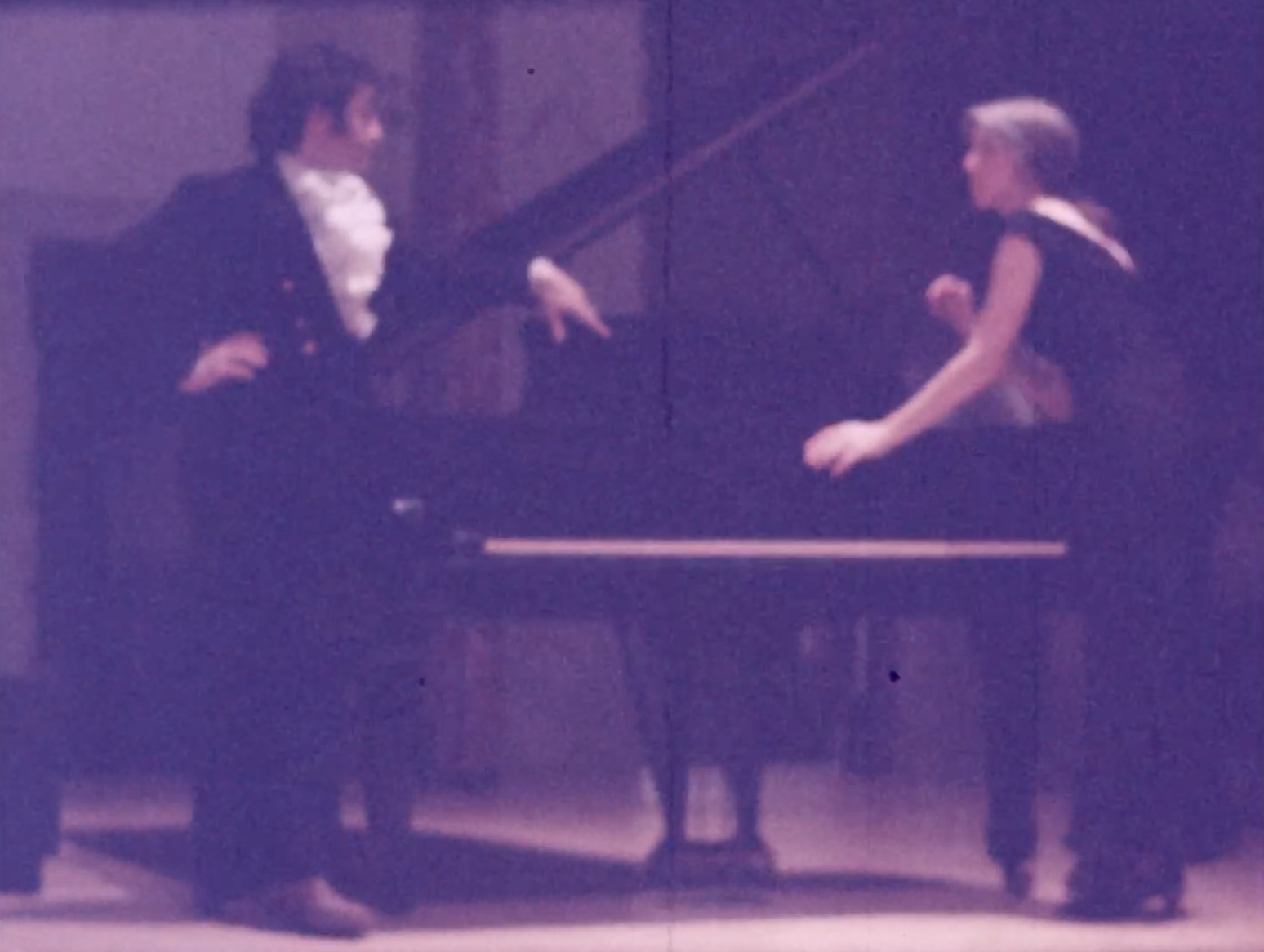
STILL: ONDINE AND SALLY DIXON IN L’AMICO FRIED’S GLAMOROUS FRIENDS (1976).
The second part of Jacoby’s film depicts Ondine and Sally Dixon (the stars of DREAM SPHINX OPERA) first descending a set of marble stairs in posh evening garb before laughing and canoodling in a more quotidian setting. Finally, Jacoby films the duo on stage on either side of a grand piano, engaged (to quote Carmen Vigil) in a “pas de deux” that both alludes to, and subverts, traditional dramatic roles and conventions. Once again, Jacoby has fused an indelible visual style with a “revitalization of the dramatic narrative” that sets his work apart from other experimental filmmakers of the period.
L'AMICO FRIED'S GLAMOROUS FRIENDS
(US, 1976)
Director: Roger Jacoby
- 12 minutes
- Digital
- Color
- Silent
Distribution Format/s: DSL/Downloadable 1080p .mp4 file on server
Published By: GME
Classroom Price: $250
Institutional Price: Inquire
To order call: 212.280.8654 or click here for information on ordering by fax, e-mail or post.