


ALL STREAMLINE TITLES
Featured Releases and Streamline Posts
Beginning with 1989’s FRIENDLY WITNESS, Warren Sonbert once again began using music in his films, thereby fusing the aural style of his early New York works with the polyvalent montage approach he had honed as a silent filmmaker over the past 15 years. 1991’s SHORT FUSE is perhaps the artist’s most intense work — featuring a variegated soundtrack and created shortly following his HIV diagnosis — while his final film, 1995’s WHIPLASH, was completed posthumously.
Sonbert continued working in silent polyvalent montage well into the 1980s — a time when many Americans turned to reactionary values under Ronald Reagan’s administration. In spite of the country’s neo-conservative climate, Sonbert’s films did not sacrifice their global purview, intellectual sophistication, or political edge. From 1981’s NOBLESSE OBLIGE to 1983’s A WOMAN’S TOUCH, 1986’s THE CUP AND THE LIP, and 1988’s HONOR AND OBEY, Sonbert explored everything from gender roles to religious organizations, the effect of global institutions of power on the proletariat, and the aftermath of Harvey Milk’s assassination.
Beginning in the 1970s, Warren Sonbert moved away from the pop music-inspired, quasi-narrative style of his early New York films towards a more sophisticated, silent filmmaking approach dubbed “polyvalent montage.” In the aftermath of Sixties’ communal hippiedom, which proved ecstatic and tragic in equal measure, many people turned inward and embraced introspection. Sociologists therefore dubbed the Seventies the “Me Decade.” While many artists followed that trend, Sonbert chose to look outward. The triptych of films he made during this enigmatic and politically-fraught decade — 1973’s CARRIAGE TRADE, 1976’s RUDE AWAKENING, and 1978’s DIVIDED LOYALTIES — intricately amalgamate footage from the artist’s many global travels.
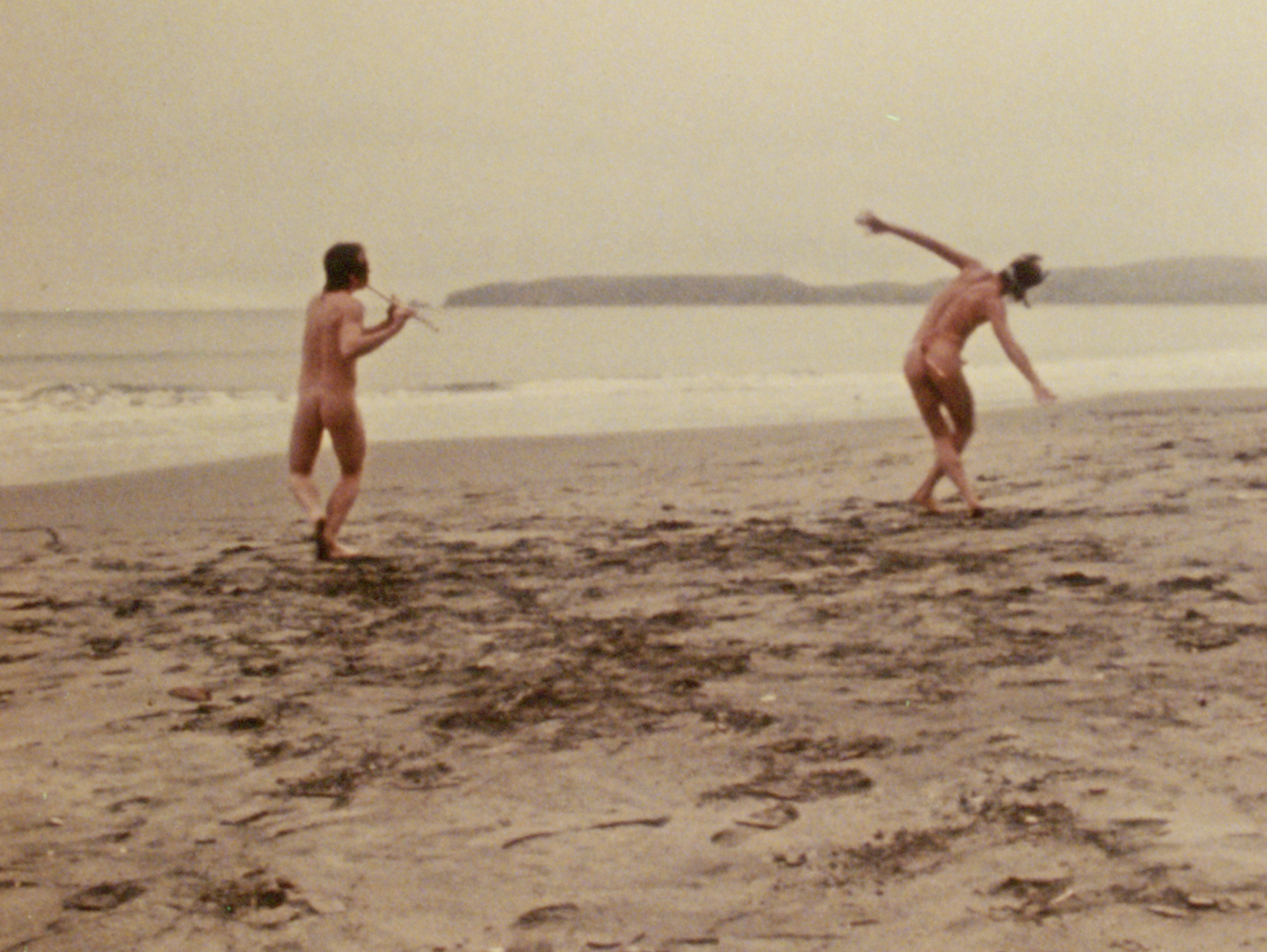
Described as “a cheerfully death-obsessed tribute to James Broughton’s poetry and filmmaking,” SCATTERED REMAINS is a cinematic performance piece enlivened by its experiments in poetic speech and poetic vision. Joel Singer creates a multi-faceted portrait of Broughton, who acts out his poetic verses within unlikely situations and surprising camera inventions. In the course of this divertissement, Broughton probes the puzzlements of mortality, destiny, and the magic of language.
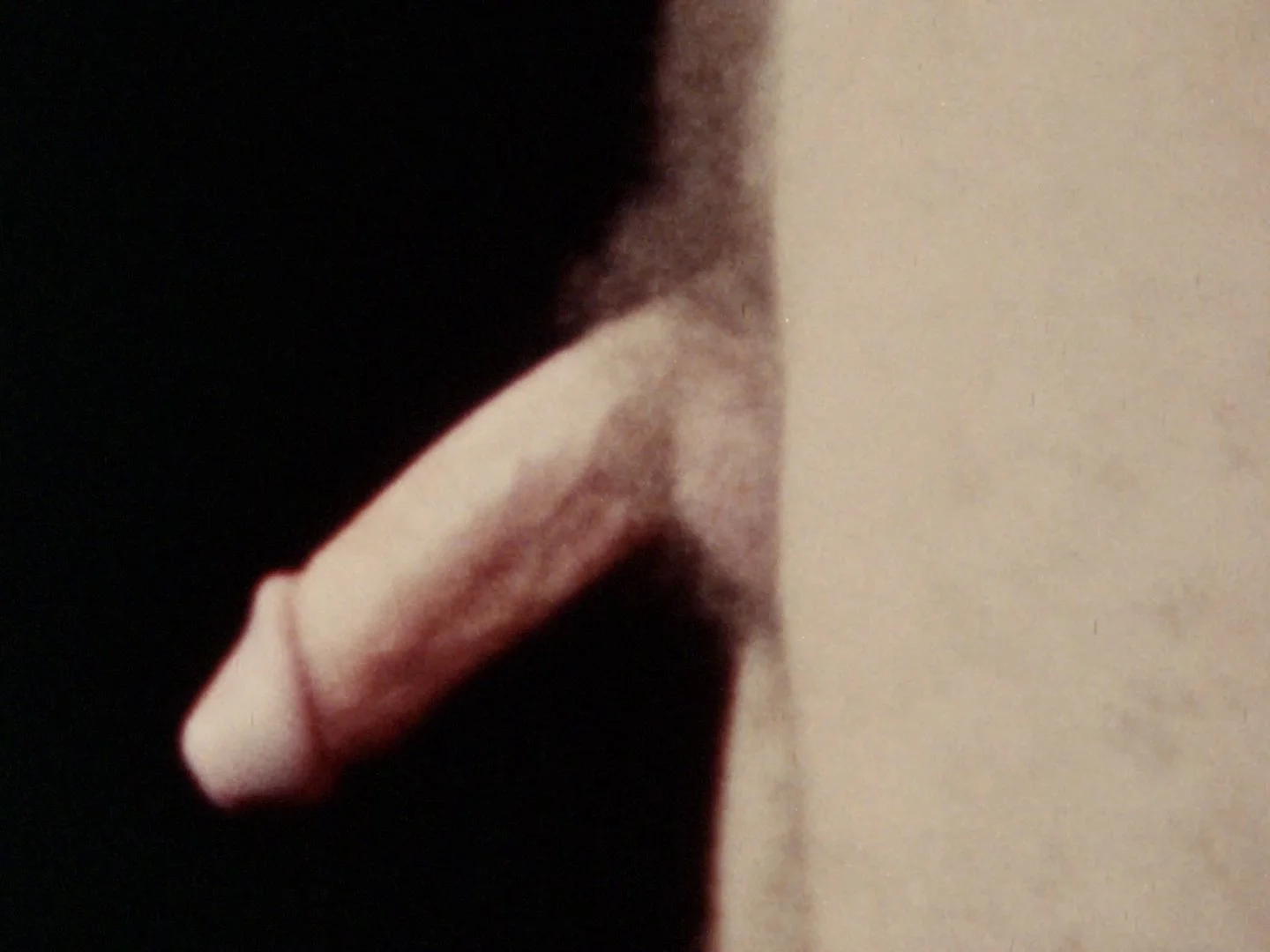
“A celebration and an apotheosis of the masculine miracle: the transformative powers of the phallus, revealed as a phenomenon of glowing beauty and wonder.” —James Broughton
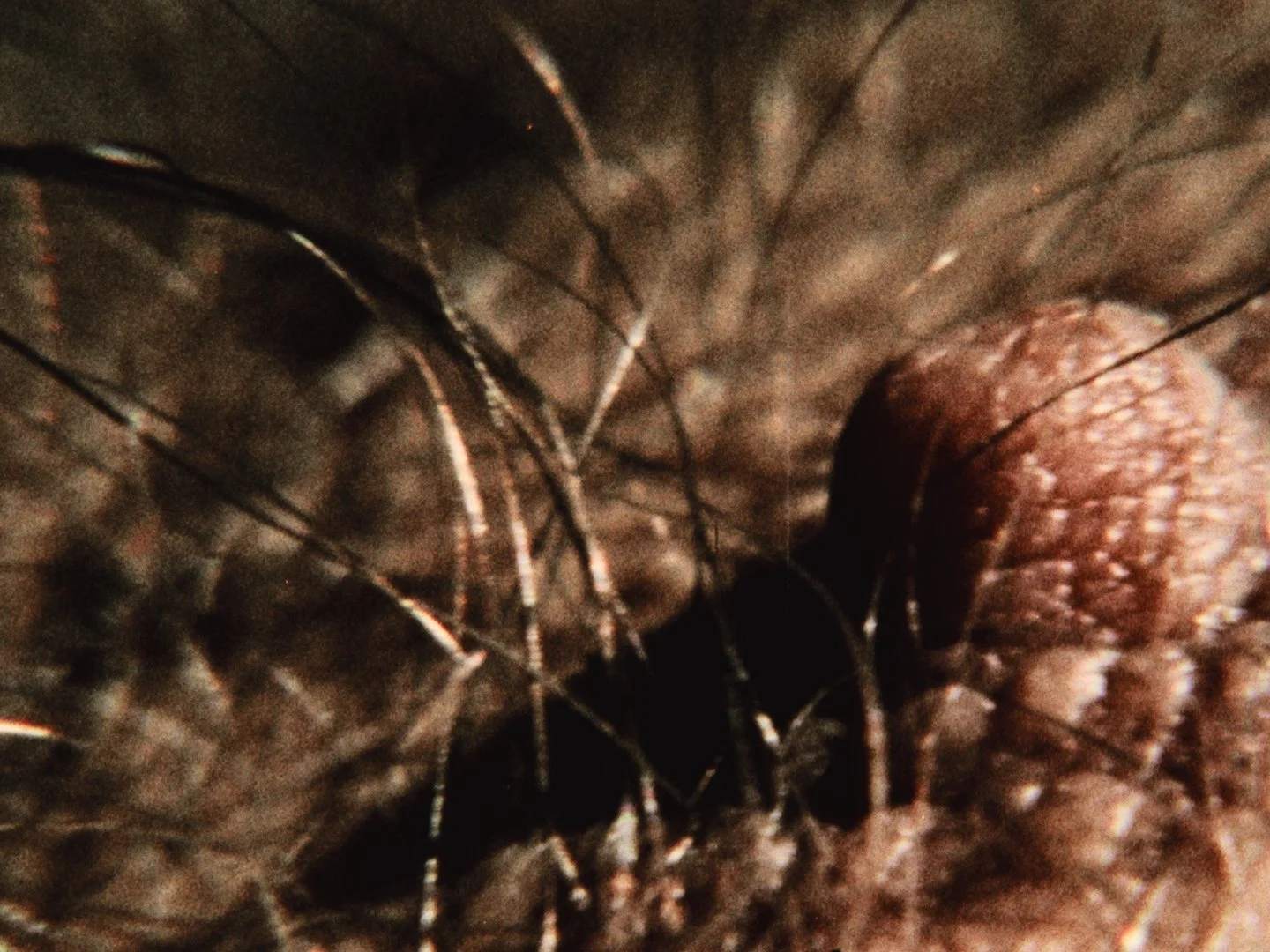
“The film consists predominantly of extreme close-ups of parts of James Broughton's body. The camera slowly becomes the tool revealing the erotic beauty of the body and the sensual pleasure in loving oneself. The ecstasy and power of sexual gratification are celebrated by the camera, as it maintains an erotic role, probing, revealing and visually caressing. Broughton's song is a praise of his body as divine androgyne, and an acceptance of this higher godly sexual power.” —Richard Bartone, Millennium Film Journal
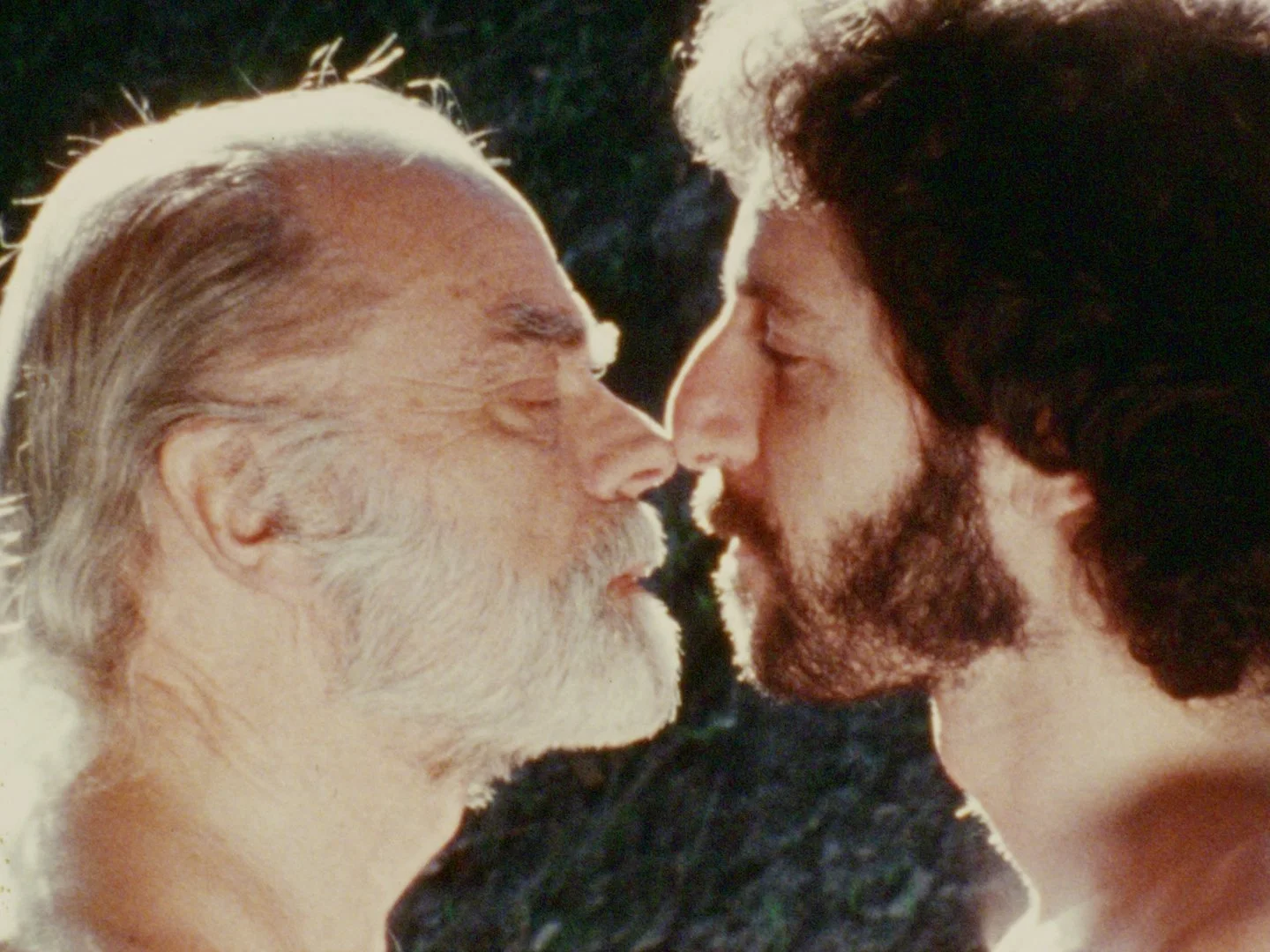
As described by James Broughton and Joel Singer, “DEVOTIONS is the vision of a world where men have forsaken rivalry and taken up affection, thereby creating a society that relishes a variety of comradely devotions. The film takes delight in observing the friendly things men can do together, from the odd to the rapturous, from the playful to the passionate. These events appear in a series of cameo duets performed by men of all ages and appetites.
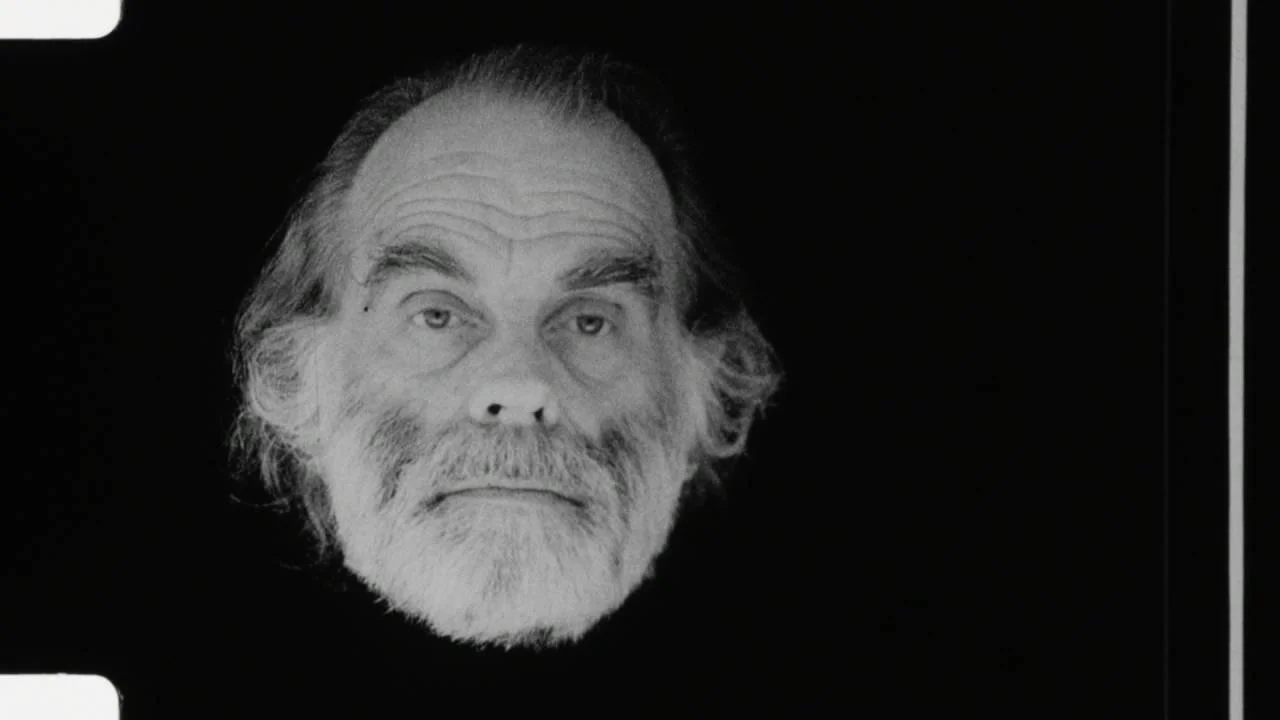
In 1976, two years after their meeting, Joel Singer proposed that James Broughton be the subject of an experimental film portrait. This suggestion reenergized Broughton’s artistic practice. The resulting film, TOGETHER, consists of two disparate images of Broughton’s head — captured by Singer on high-contrast, black-and-white, 16mm film — slowly conjoining from opposite sides of the screen via rapid frame-by-frame intercutting. This stroboscopic imagery is accompanied by Broughton’s recitation of his poem of the same name.
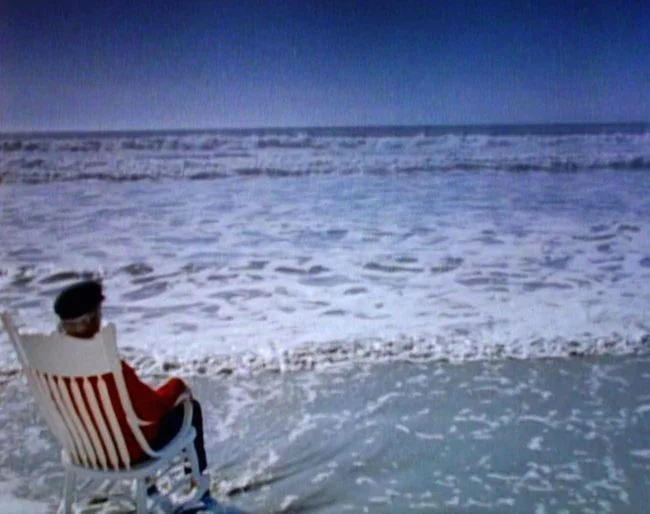
James Broughton’s TESTAMENT (1974) reflects on the artist’s “quest for erotic transcendence” through the amalgamation of fragments of his previous films combined with newer footage. Broughton himself remarked, “I thought this would be my final film… it’s a self-portrait bouncing me from my babyhood to my imagined death.”
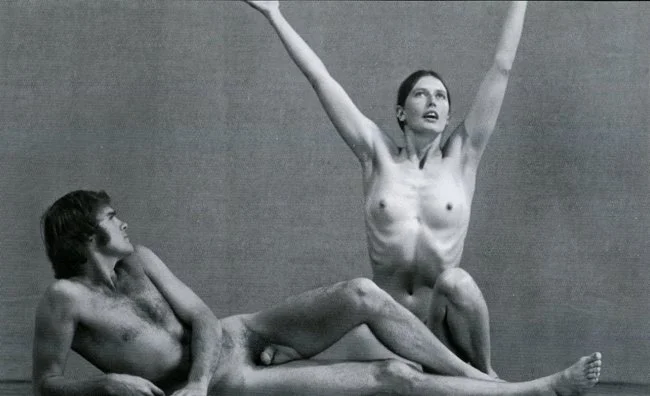
Three years into the exhilarating second act of his filmmaking career, James Broughton made THE GOLDEN POSITIONS (1970). Described by Broughton himself as “a series of naked tableaux vivants that glorify the human body,” THE GOLDEN POSITIONS once again finds the artist embracing nudity and human sexuality in a style distinct yet not dissimilar from his comeback piece, 1967’s erotic countercultural classic THE BED.
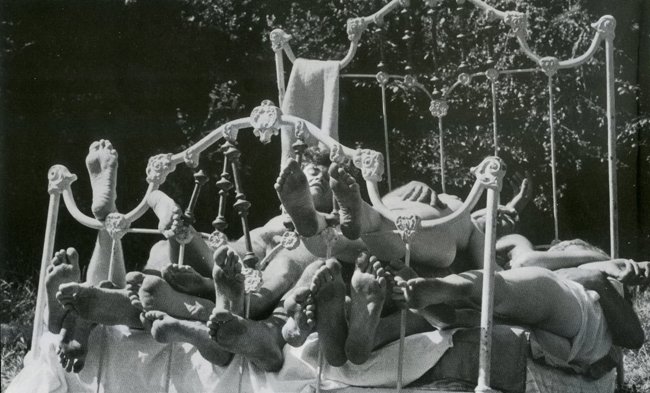
Following the success of THE PLEASURE GARDEN (1953), James Broughton was offered a Hollywood movie deal, which he turned down. Instead, the artist took a hiatus from filmmaking to focus on his poetry. 15 years later, he returned to filmmaking with THE BED (1967), which is now widely regarded as his best-known work and a countercultural classic.
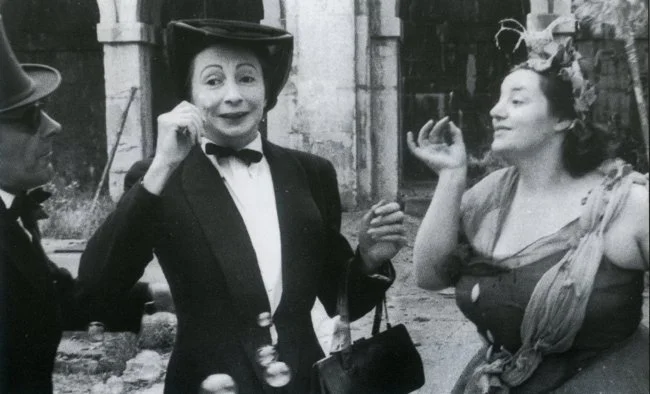
A joyous musical fantasy celebrating “Love in the Park” and “the victory of the pleasure principle over all prudes and killjoys,” THE PLEASURE GARDEN was made in London and shot in the ruined gardens of the Crystal Palace. Winner of the Prix de Fantasie Poetique at the 1954 Cannes Film Festival, it is widely regarded as the crowning achievement of James Broughton’s early film career.
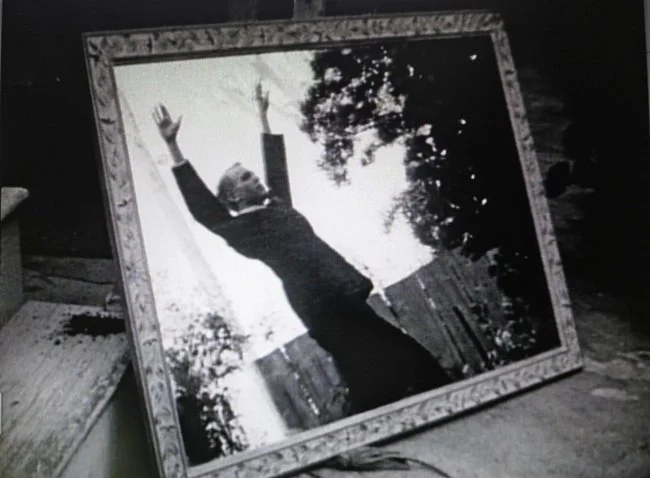
FOUR IN THE AFTERNOON depicts four poetic variations on the search for love featuring four oddball characters — Game Little Gladys, The Gardener’s Son, Princess Printemps, and The Aging Balletomane — living out their daydreams. Willard Maas dubbed FOUR IN THE AFTERNOON “the best poetry film ever made.”
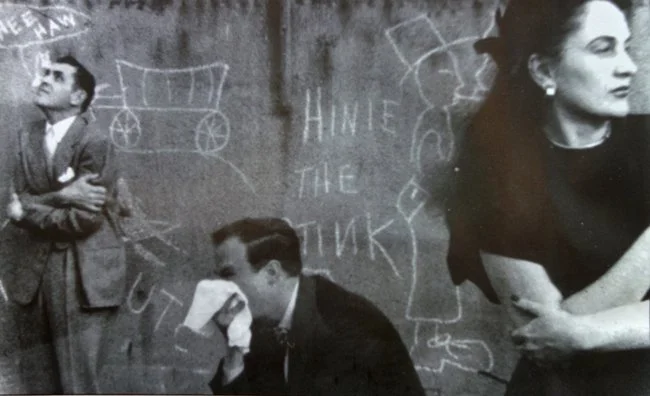
One of the first major works of the San Francisco film movement, MOTHER’S DAY is a painfully humorous recollection of childhood in which a family of singular adults recreate their infancy by behaving as they did when growing up. Peter Kubelka once remarked, “MOTHER’S DAY, for me is one of the great films in film history.”
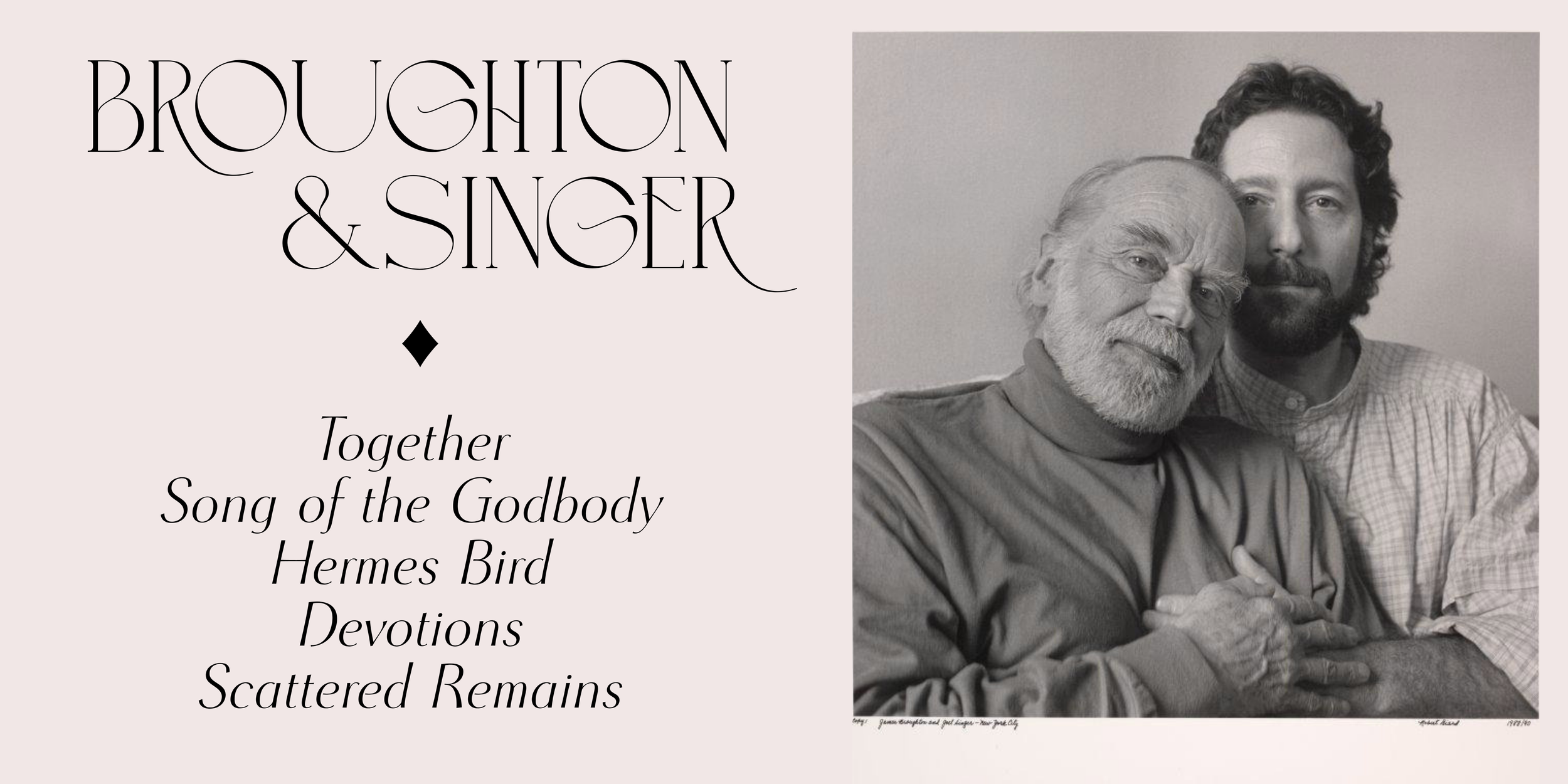
GME is pleased to present TOGETHER, SONG OF THE GODBODY, HERMES BIRD, DEVOTIONS, and SCATTERED REMAINS in a curated package, titled Broughton & Singer, which is devoted to James Broughton’s and Joel Singer’s personal and creative partnership. SONG OF THE GODBODY was featured in Jon Gartenberg’s program James Broughton, Cinema Poet, which screened at The Museum of Modern Art on July 6 and July 10, 1979.
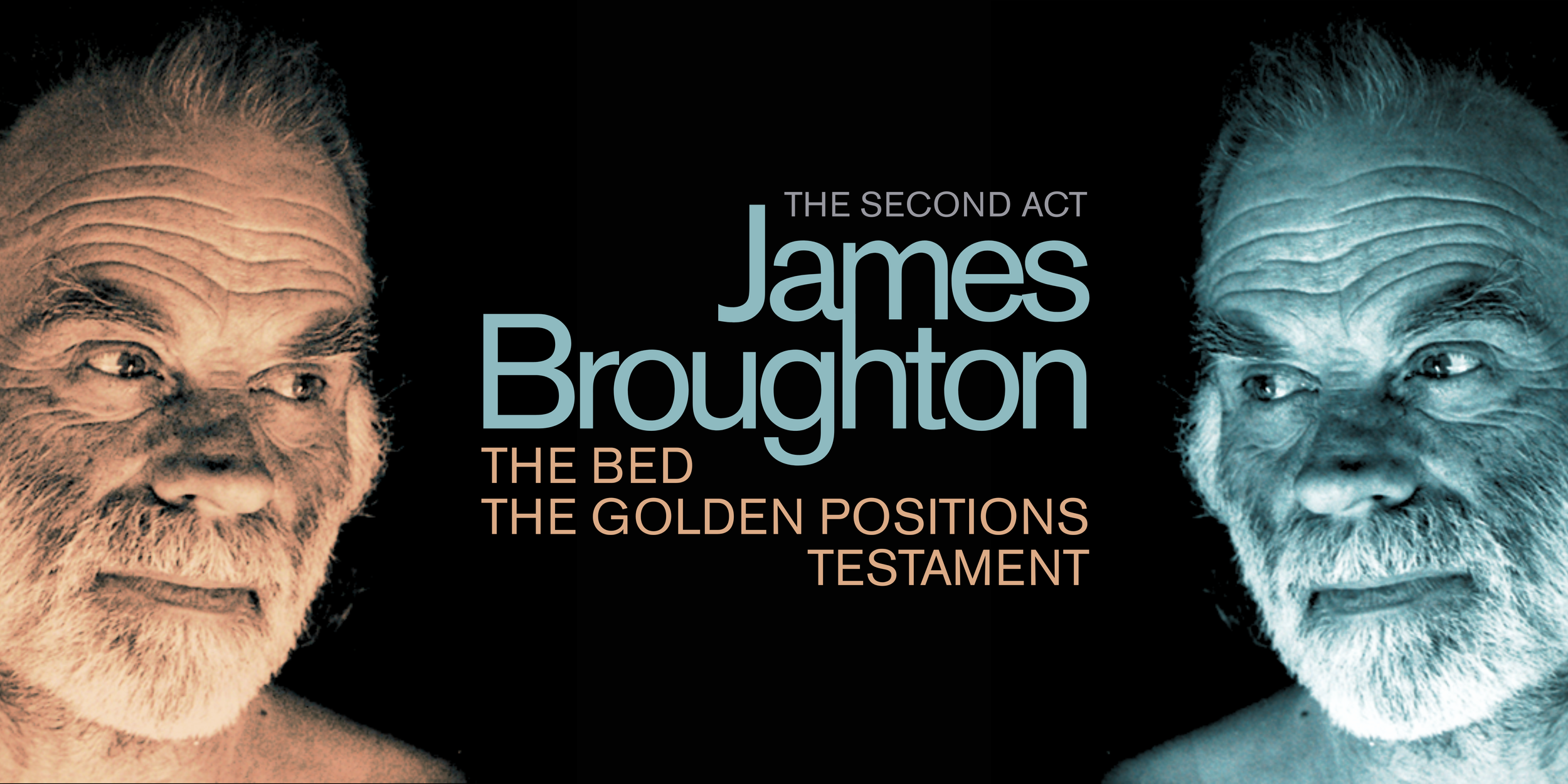
After THE PLEASURE GARDEN was honored at the 1954 Cannes Film Festival, James Broughton was offered a Hollywood movie deal, which he turned down. The artist instead took a 15-year hiatus from filmmaking altogether to focus on his poetry. Upon returning to the medium in 1967, the counterculture was America’s dominant culture, and Broughton’s cinematic comeback met this euphoric and liberating moment.
GME is pleased to present THE BED (1967), THE GOLDEN POSITIONS (1970), and TESTAMENT (1974) in a curated package devoted to the second act — spanning the rise and fall of America’s “hippie” era — in Broughton’s multifaceted career as a filmmaker.
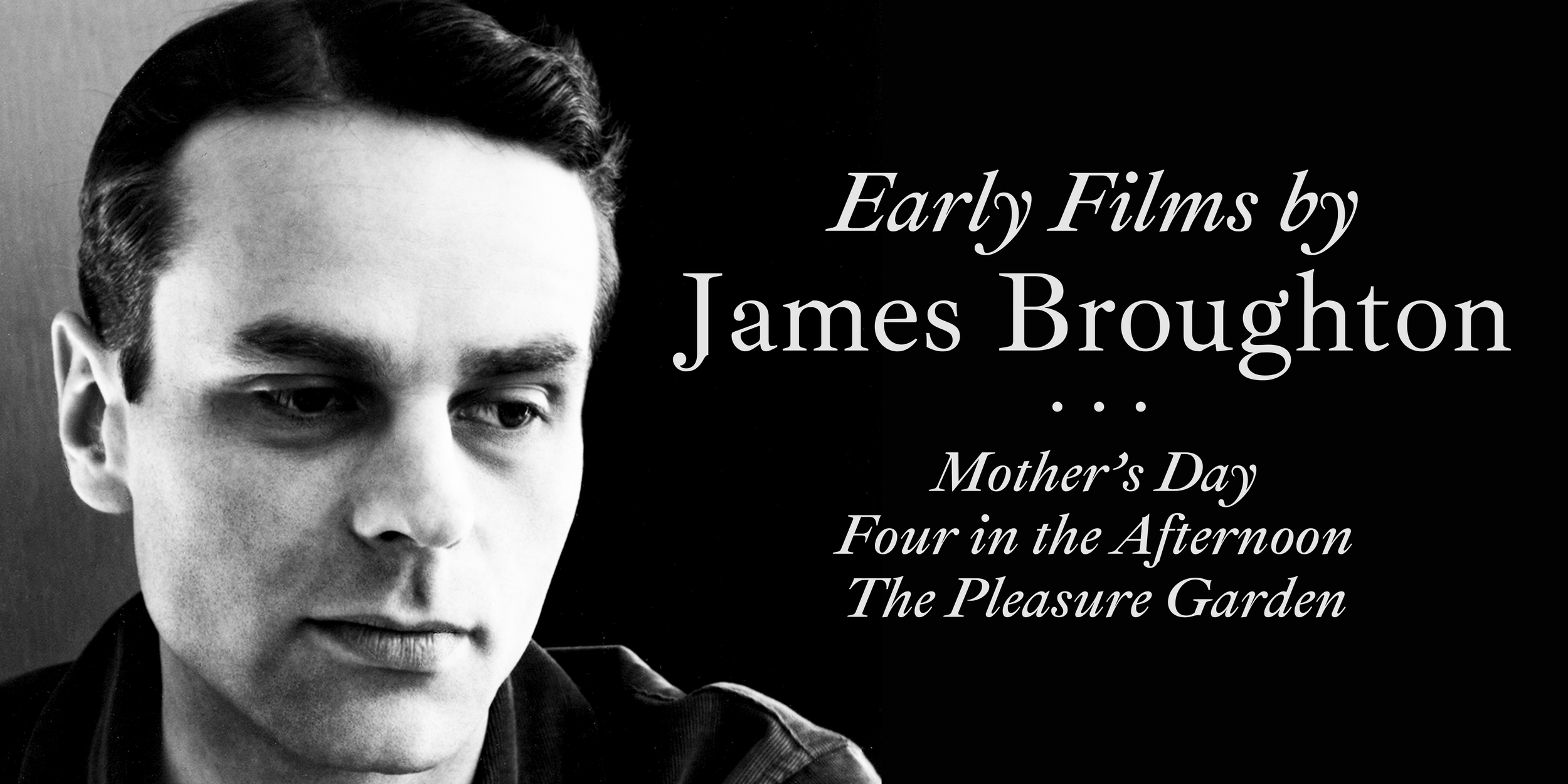
From 1948 to 1953, James Broughton crafted a series of humorous, at times fantastical, and often playfully anti-authoritarian films imbibed with his poetic practice that earned him the reputation of “the father of West Coast experimental cinema.” GME is pleased to present three of those films — Broughton’s solo debut MOTHER’S DAY (1948), 1951’s FOUR IN THE AFTERNOON, and the artist’s crowning achievement from this period, 1953’s THE PLEASURE GARDEN —in the curated package Early Films by James Broughton.
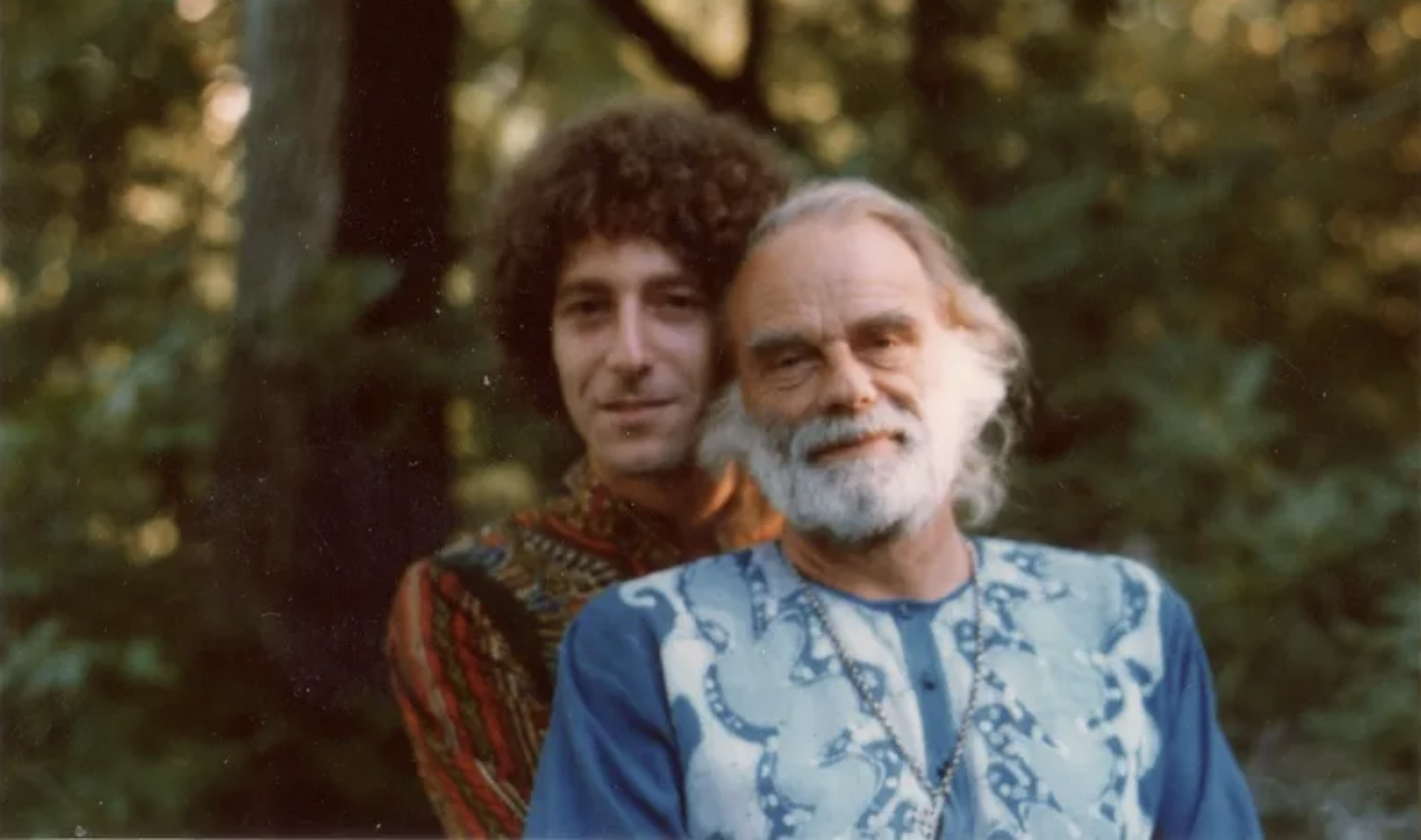
In 1979, while working as a curator and archivist in The Museum of Modern Art’s Department of Film, Jon Gartenberg programmed four films by James Broughton: FOUR IN THE AFTERNOON (1951), THE PLEASURE GARDEN (1953), THE GOLDEN POSITIONS (1970), and SONG OF THE GODBODY (1977) — the lattermost a collaboration between Broughton and his longtime partner, Joel Singer. GME is pleased to welcome a selection of films by Broughton into our collection, including five of his collaborations with Singer, which are now available for rental or purchase by academic and cultural institutions worldwide. 47 years following the aforementioned MoMA program, this acquisition of Broughton’s and Singer’s films represents a full-circle moment in Gartenberg’s curatorial career and his advocacy of these great artists’ work. These films, spanning 1948-1988, are available individually as well as across three packages: Early Films by James Broughton, James Broughton: The Second Act, and Broughton & Singer.
Roger Jacoby (1944—1985) was a pioneering experimental filmmaker whose wildly improvisational, hand-processed works showcased a painterly and diaristic approach and, in his last films, a fervent political consciousness. His filmmaking career spanned from 1972 until his untimely death due to complications from AIDS in 1985, during which he completed eight films. Gartenberg Media is pleased to distribute four of these films — 1974’s DREAM SPHINX OPERA, 1976’s L’AMICO FRIED’S GLAMOROUS FRIENDS, 1980’s HOW TO BE A HOMOSEXUAL PART I, and Jacoby’s final film, 1982’s HOW TO BE A HOMOSEXUAL PART II — as Digital Site Licenses to academic and cultural institutions worldwide. These titles were recently restored by the Berkeley Art Museum and Pacific Film Archive through the National Film Preservation Foundation’s Avant-Garde Masters Grant.
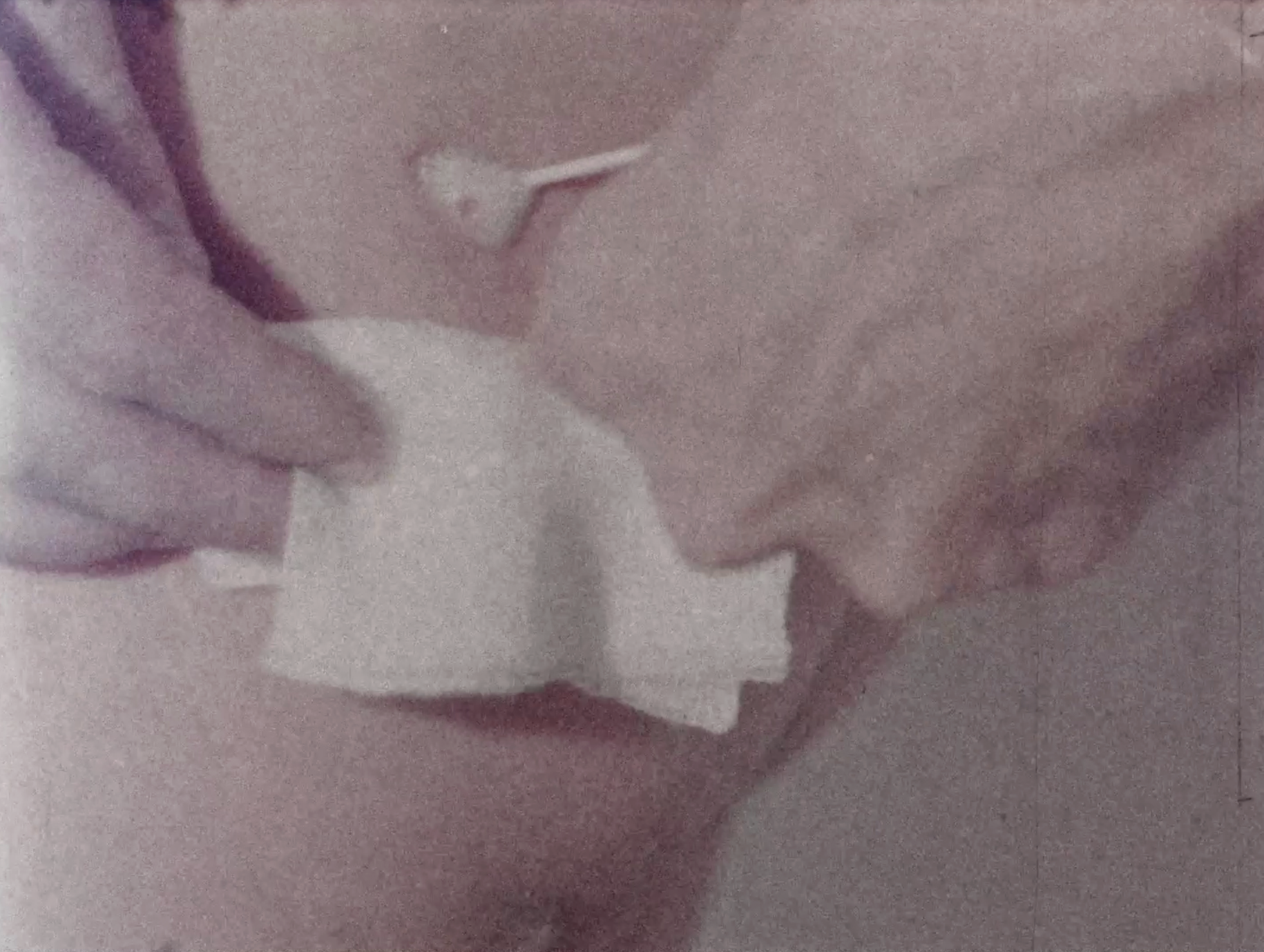
Like its predecessor, HOW TO BE A HOMOSEXUAL PART II sees Roger Jacoby fuse his distinctive hand-processed visual style with a newfound political consciousness. This film in particular, made shortly following Jacoby’s HIV diagnosis, exemplifies the adage “the personal is political.” It is undoubtedly his most intimate and moving work.
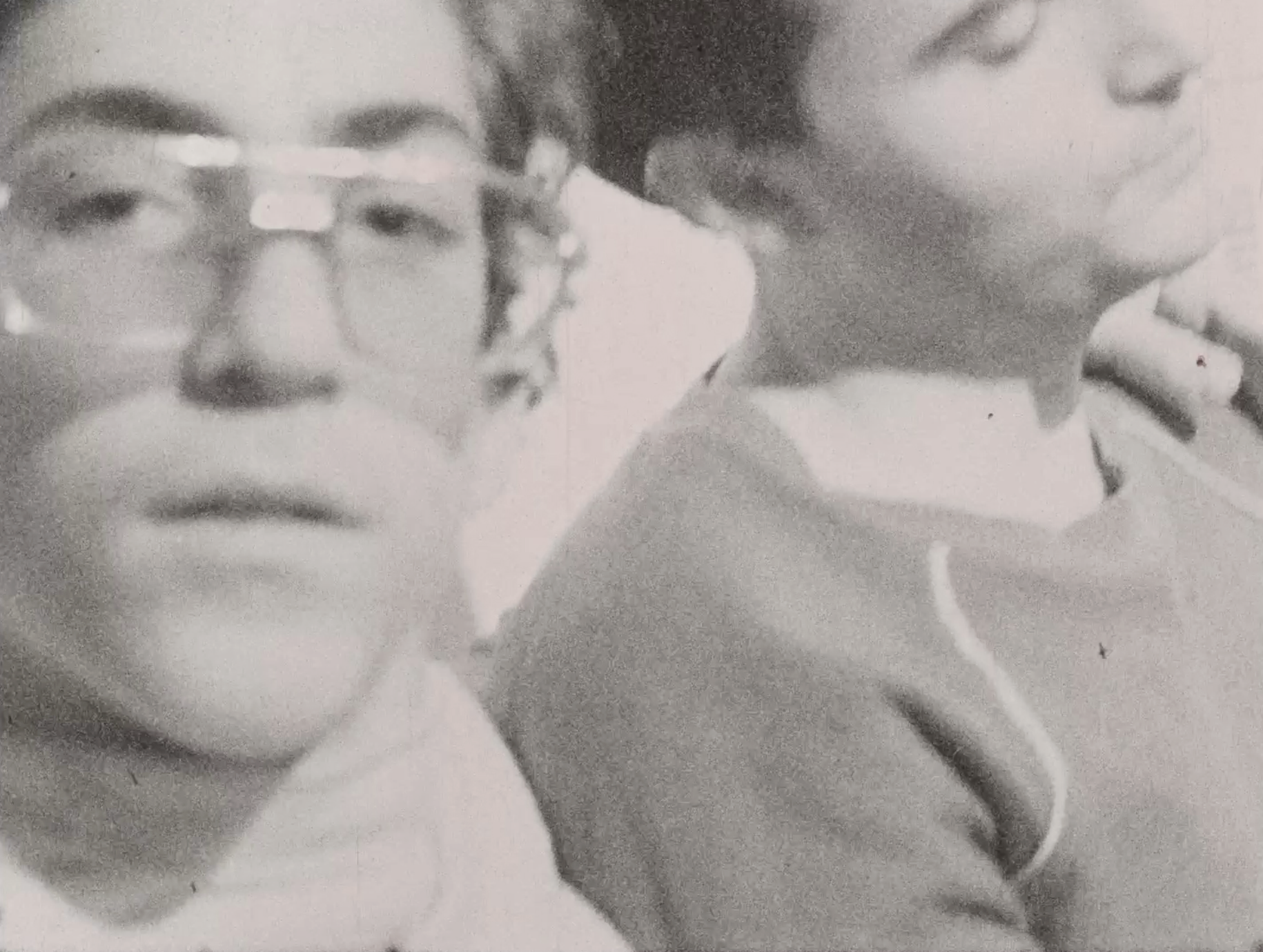
”HOW TO BE A HOMOSEXUAL began, said Jacoby, as ‘excerpts from a compilation journal work begun in 1979. It is an ironic title — there's nothing sexually explicit about the film.’ But the film is richly sensual... In every scene, the emulsion captures the images, enhances, then betrays, overpowers and destroys them, as the patterns and color reshape the filmed reality into a different landscape.” —Kathleen Tyner, Cinematograph
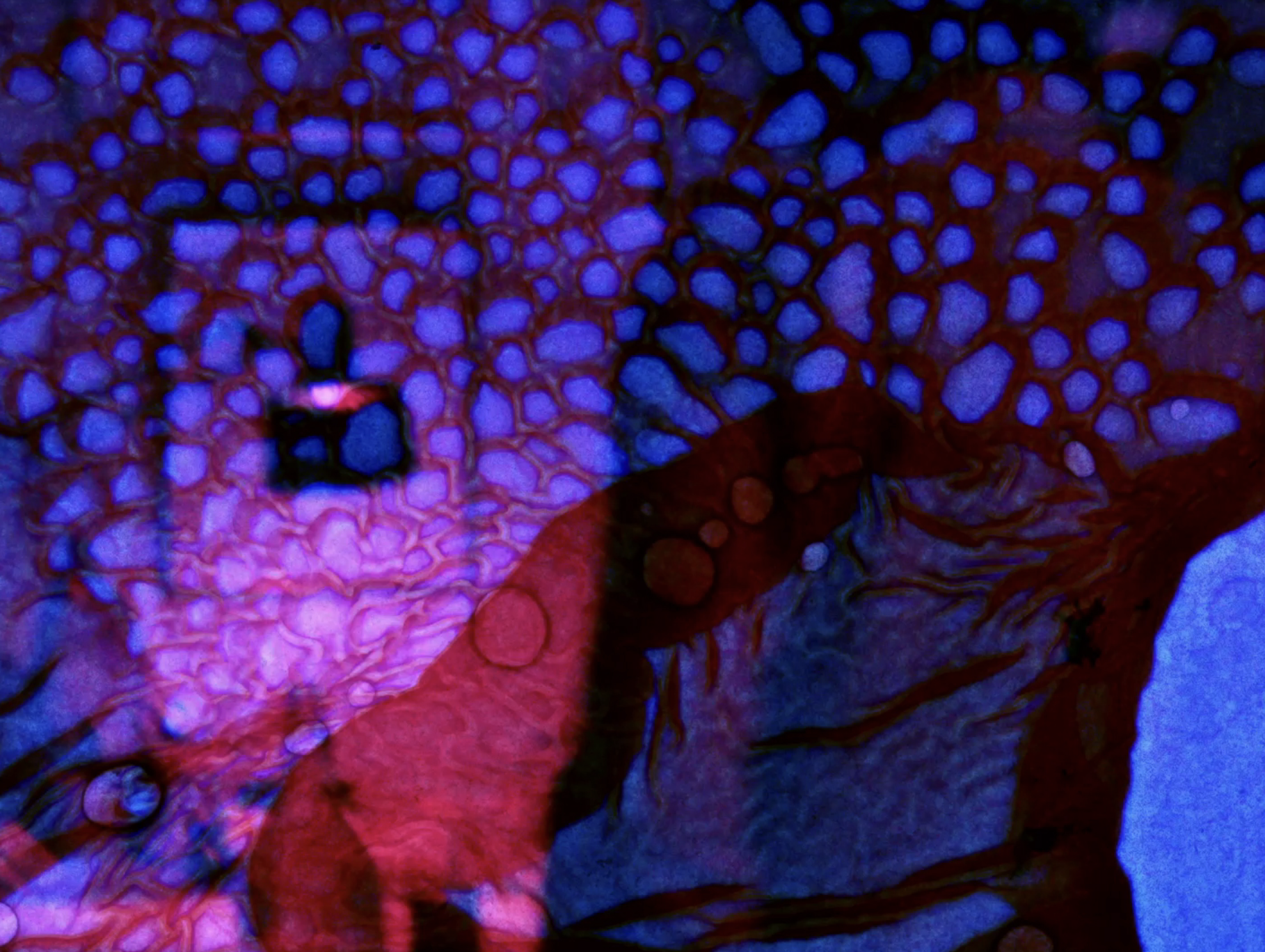
"In L'AMICO FRIED'S GLAMOROUS FRIENDS, which is built around a pas de deux by Ondine and Sally Dixon... the relationship to traditional dramatic narrative is rather obvious; the actors are in well-defined roles and are recognizable in them, and the films are as such accessible. More or less. And it is this more or less quality in which I am most interested; because the drama isn't the main object of his presentation, rather a component in Jacoby's total formal approach to film." —Carmen Vigil, Museum of Modern Art program notes, Field of Vision
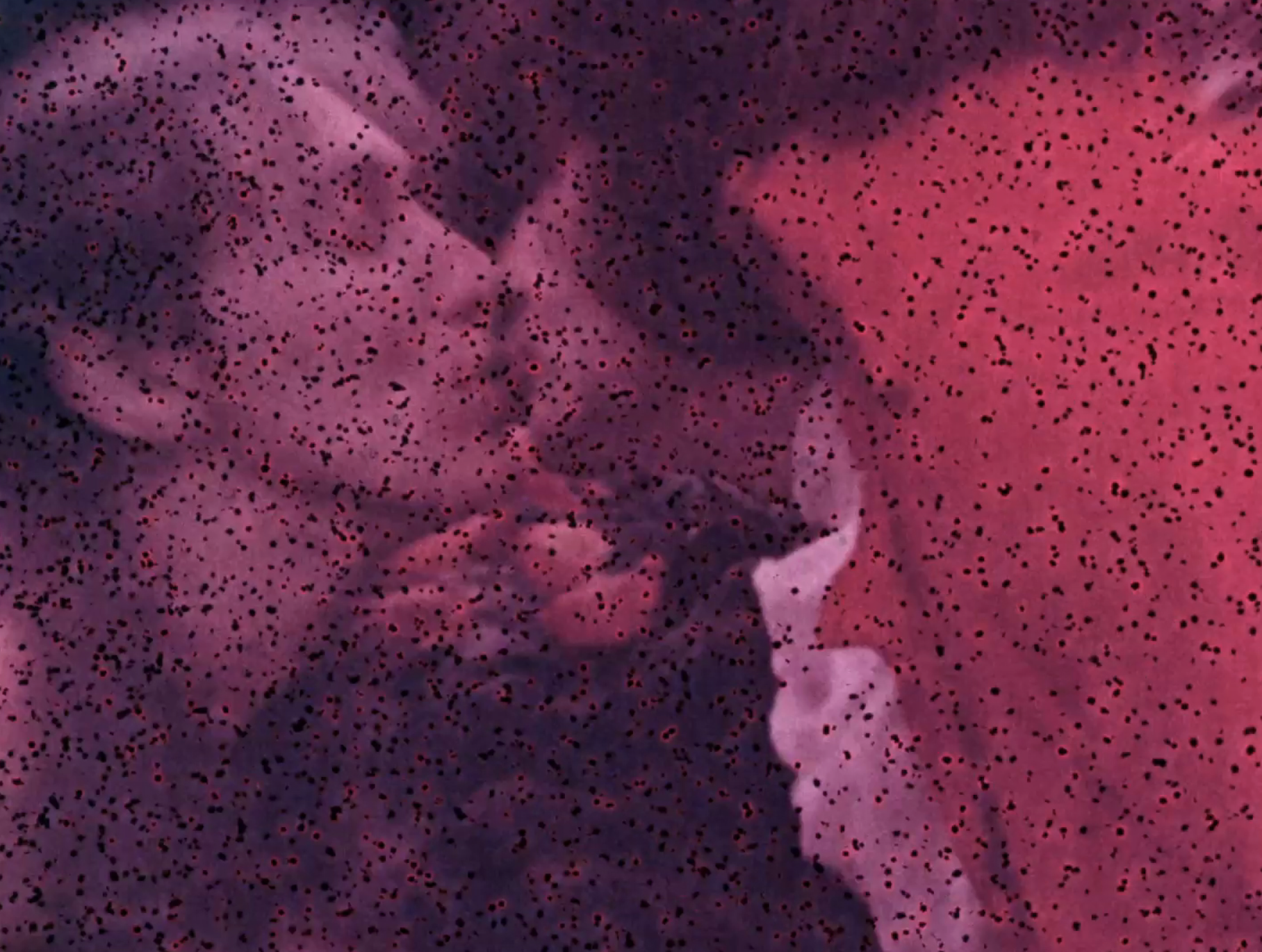
Ondine and Sally Dixon “star” as ecstatic 19th century lovers in Roger Jacoby’s first home-processed film. Nickelodeon imagery, school children of Pittsburgh and the Pittsburgh Botanical Conservatory are seen throughout.
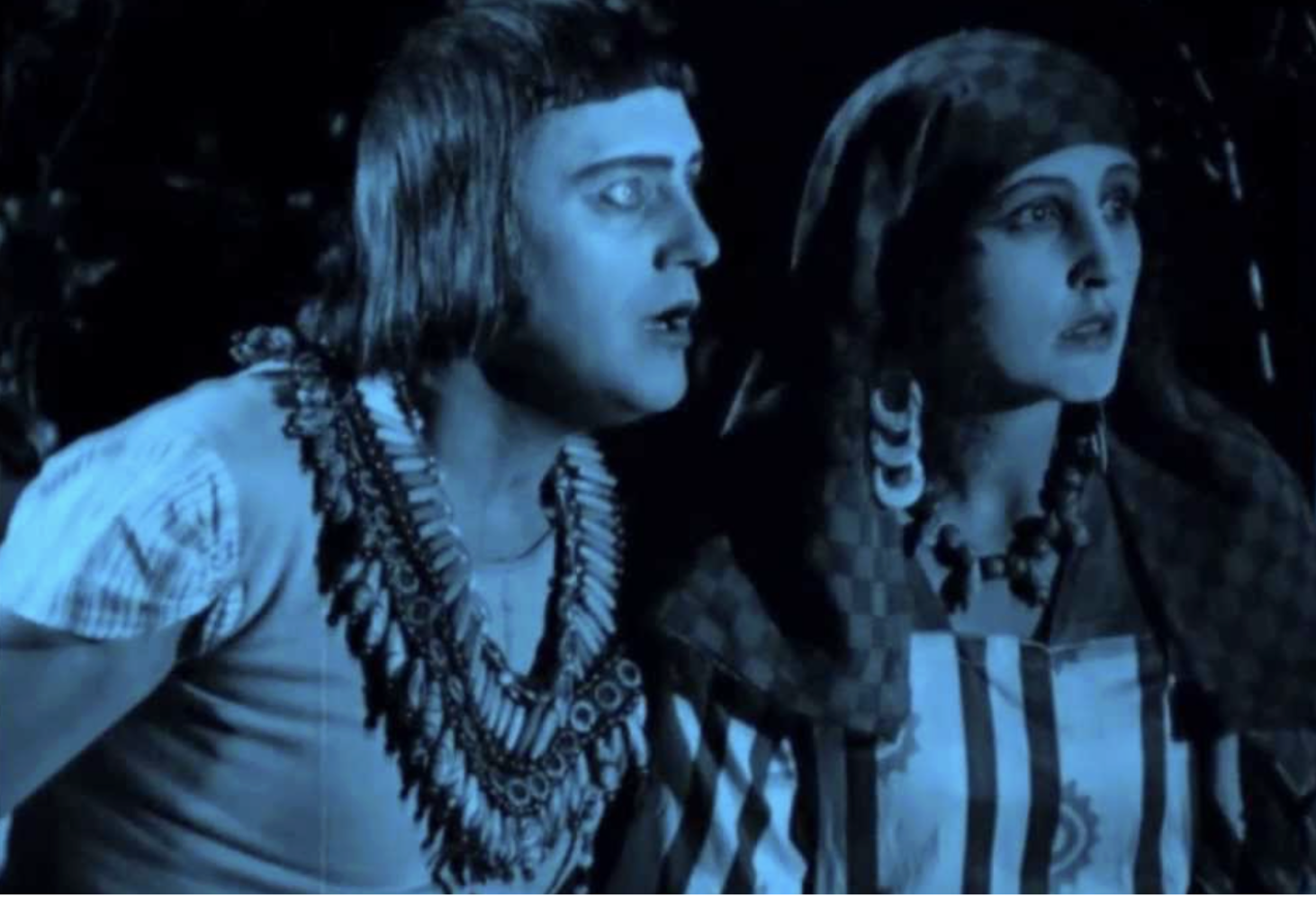
Gartenberg Media is pleased to present Ernst Lubitsch's landmark work of German silent cinema, 1922's THE LOVES OF PHARAOH, as a Digital Site License, now available to North American academic institutions. To inquire about purchasing this title for institutional use, please contact sales@gartenbergmedia.com.
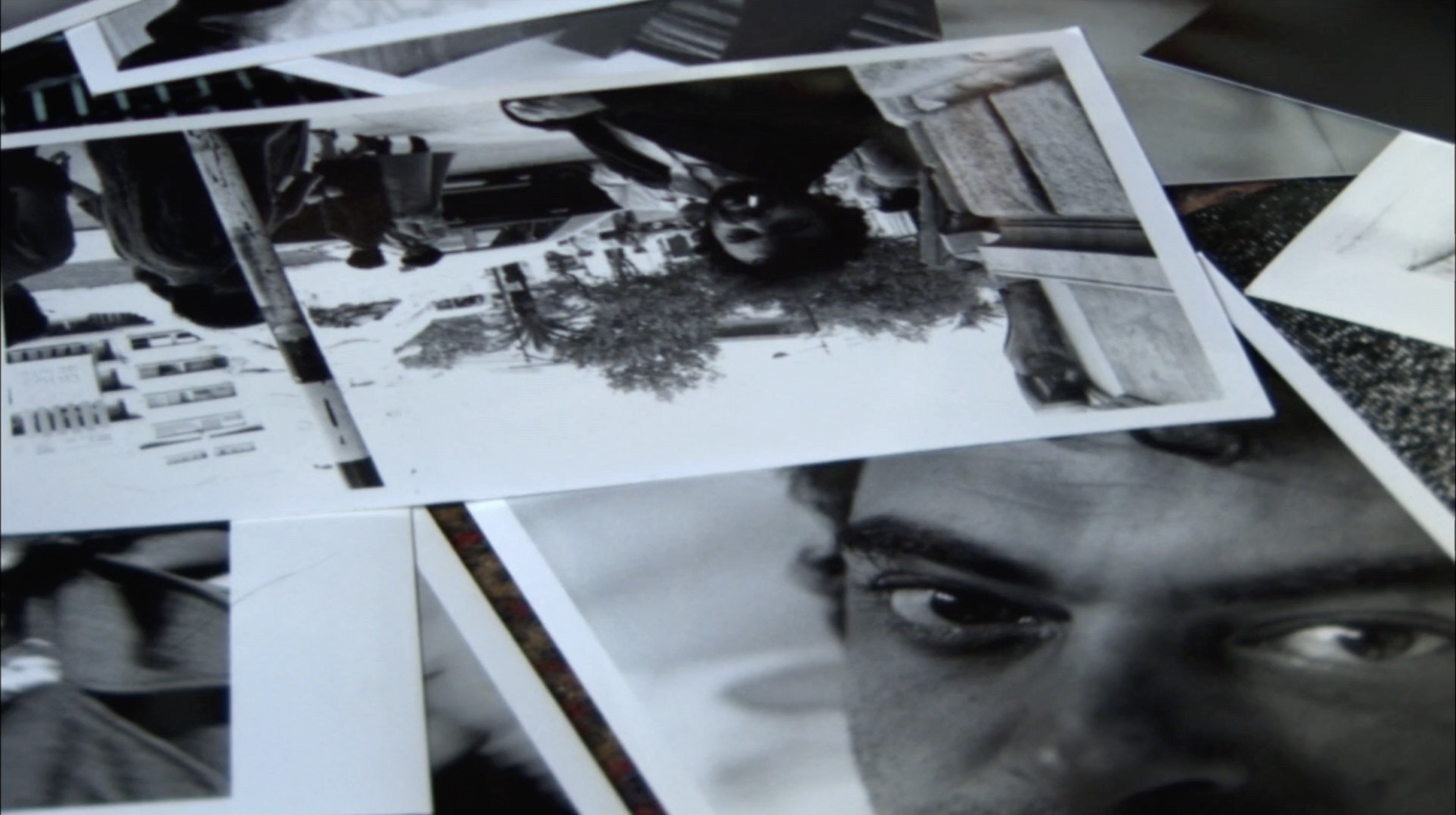
In 2008, GME President Jon Gartenberg programmed Paula Gaitán’s experimental documentary DAYS IN SINTRA at the Tribeca Film Festival. 18 years later, GME is pleased to distribute Gaitán’s landmark film as a Digital Site License to academic and cultural institutions in the United States.
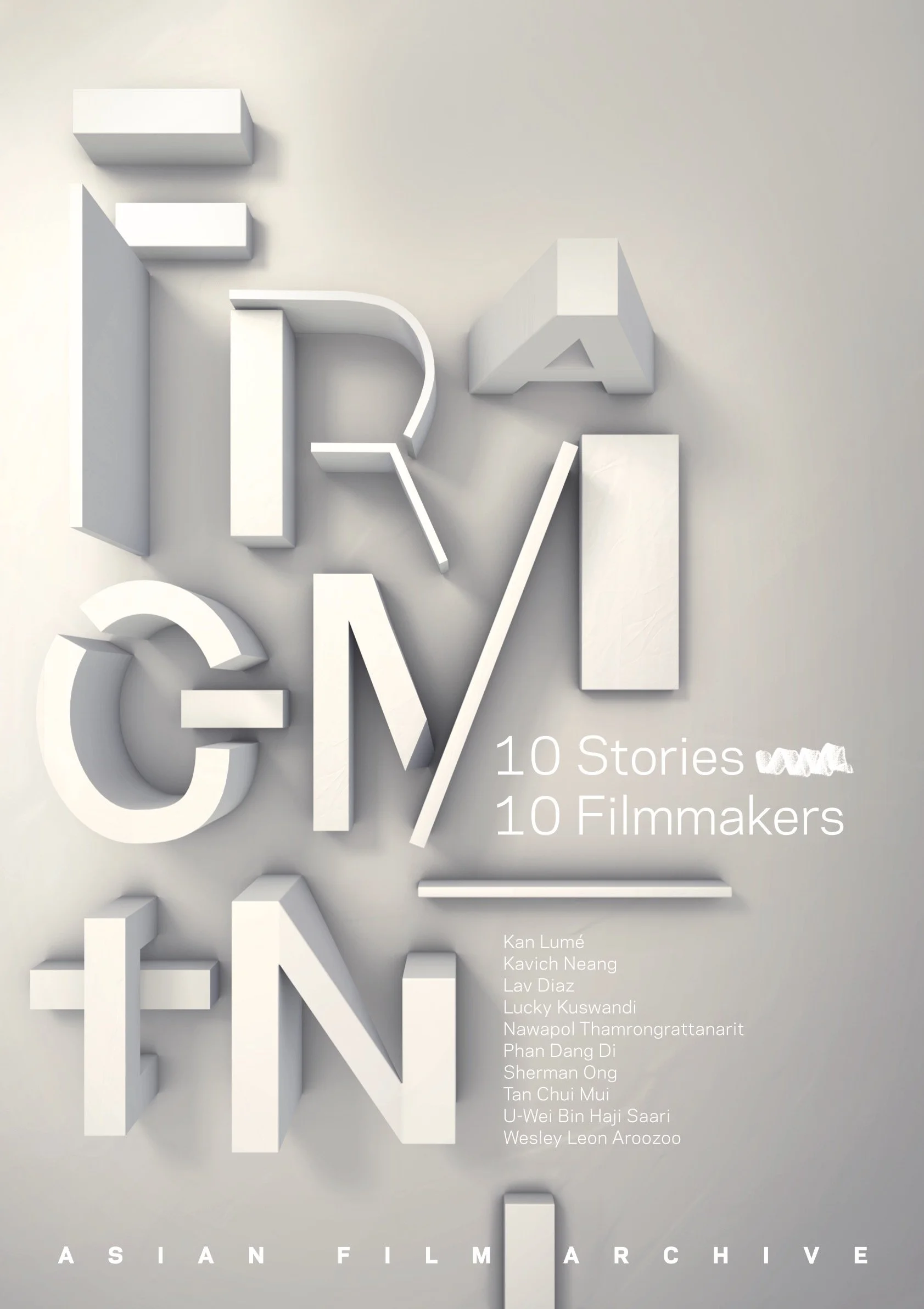
GME is pleased to distribute the new omnibus film FRAGMENT, commissioned by the Asian Film Archive. This release is an important expansion of GME's deeper reach into Asian cinema and contemporary short and experimental films, including works from Singapore, Cambodia, Indonesia, Thailand, Vietnam, and the Philippines, among other countries.
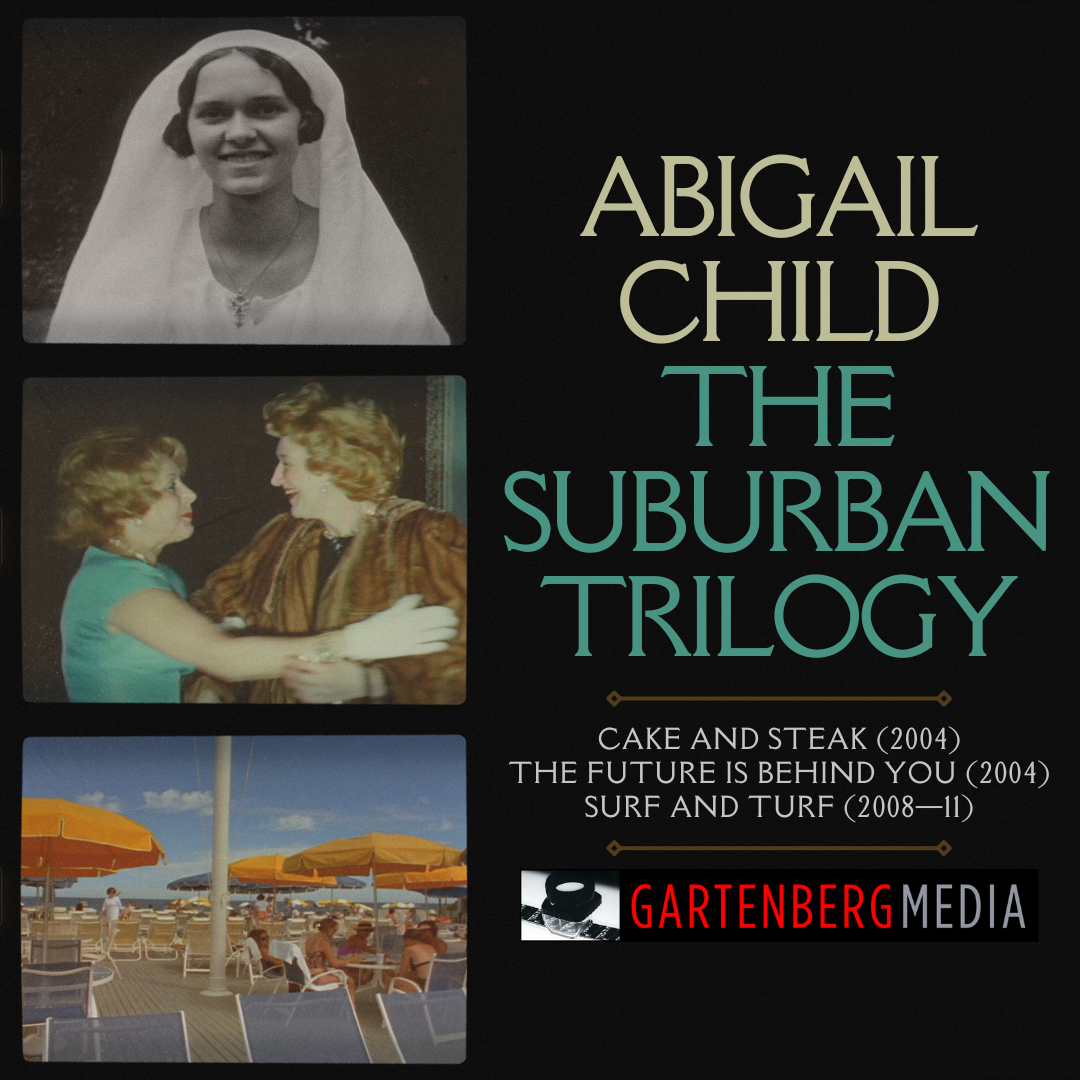
In THE SUBURBAN TRILOGY (2011), Abigail Child brings together three separately created films – CAKE AND STEAK (2004), THE FUTURE IS BEHIND YOU (200—5), and SURF AND TURF (2011). These three films provide a multifaceted and incisive commentary on female identity.
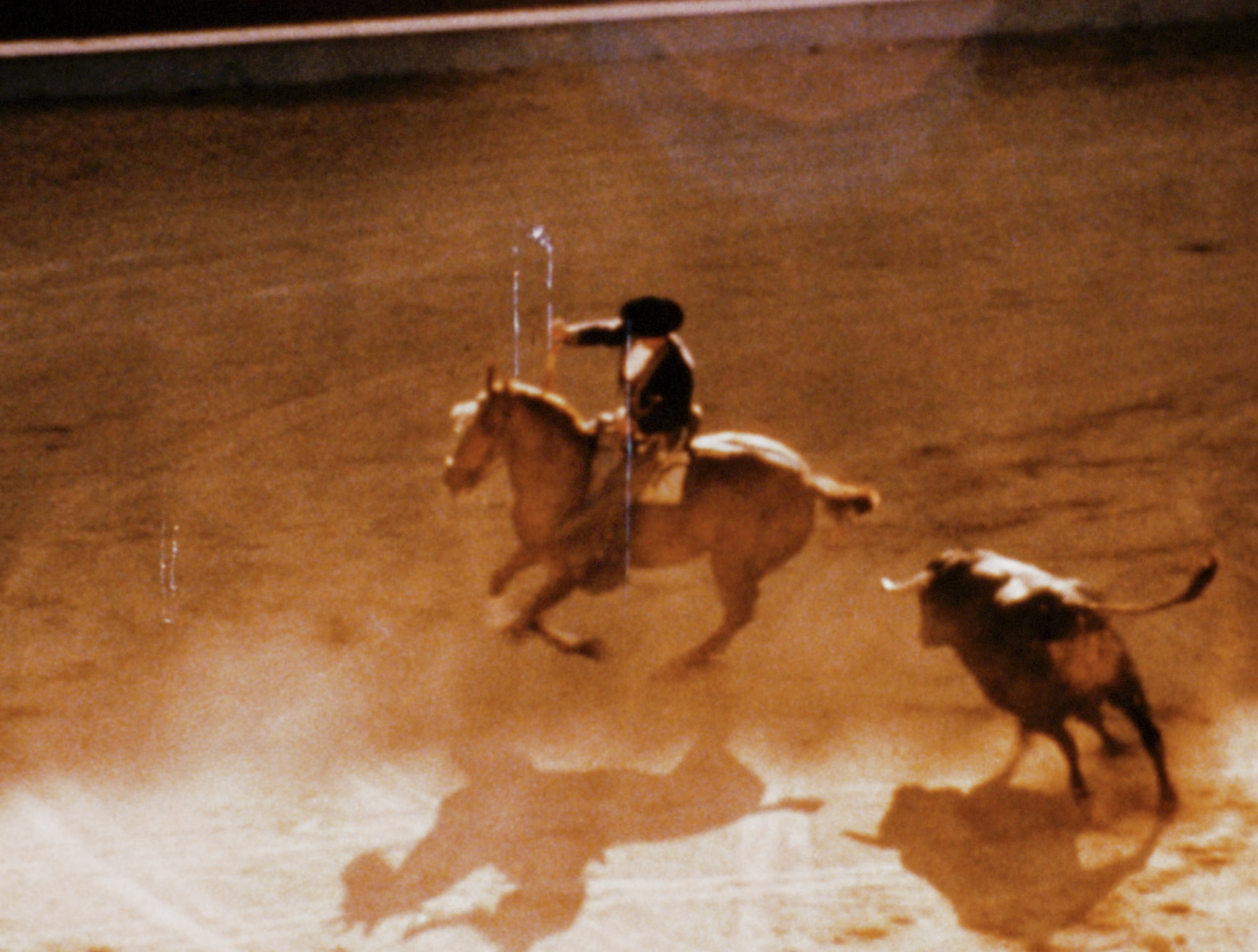
WHIPLASH is the final film by Warren Sonbert, a globe-spanning collage haunted by themes of mortality. Sonbert made WHIPLASH in the years following his HIV diagnosis; his vision and motor skills impaired, he gave his companion, Ascension Serrano, detailed instructions about the assembly of specific shots and the music to be used as a counterpoint to the images. Before his death in 1995, he asked filmmaker Jeff Scher (a former student of Sonbert's at Bard) to complete the film. WHIPLASH was also completed with assistance from the Film Preservation Project of the Estate Project for Artists with AIDS, of which GME President Jon Gartenberg was Program Director. The film premiered posthumously at the New York Film Festival in 1997.
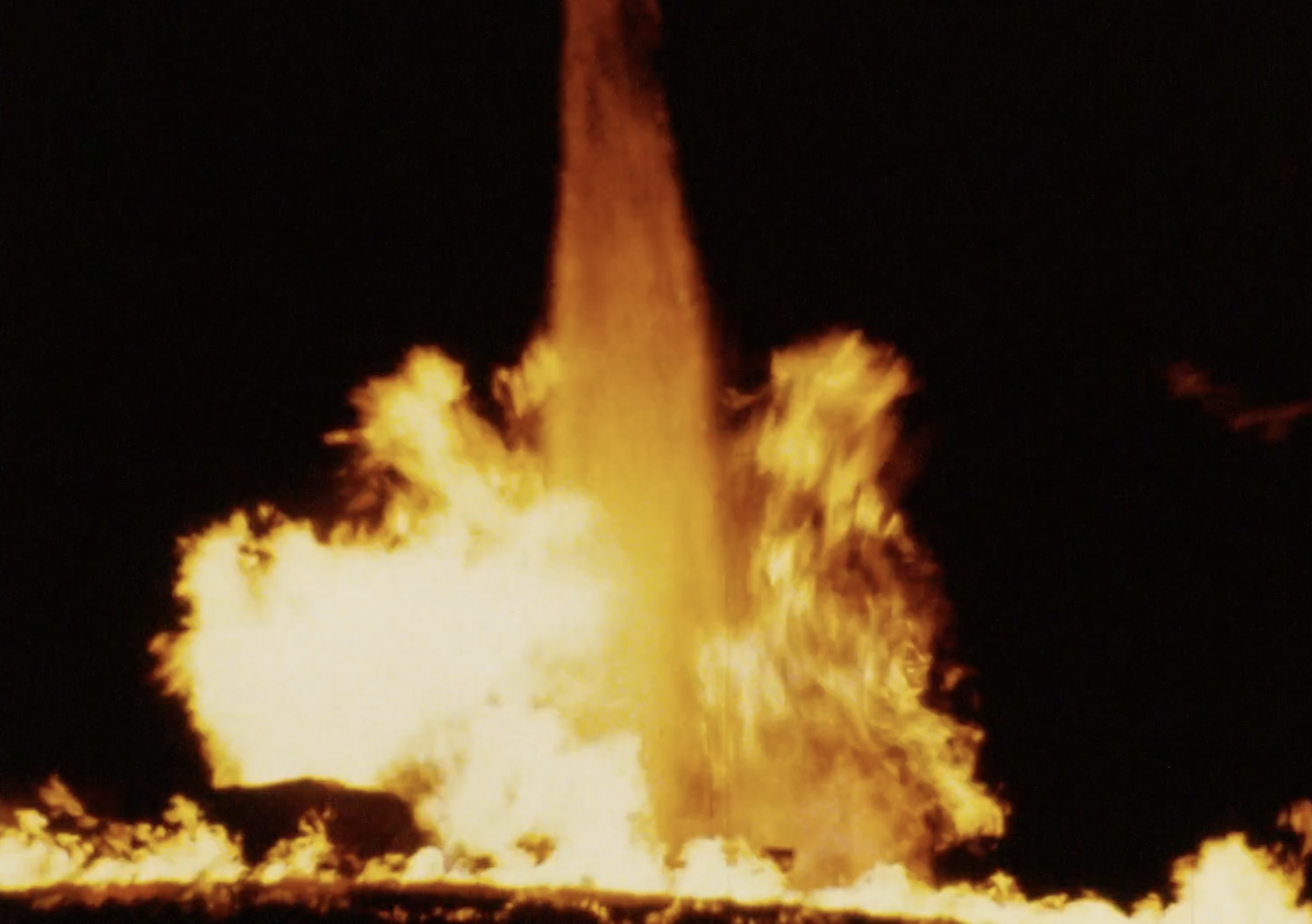
Warren Sonbert described DIVIDED LOYALTIES as a film “about art versus industry and their various crossovers.” According to film critic Amy Taubin, “there is a clear analogy between the filmmaker and the dancers, acrobats and skilled workers who make up so much of his subject matter.”
In addition to five collaborative titles by James Broughton and Joel Singer, GME is pleased to present Singer’s rarely-screened solo work POET IN ORBIT (1980).
POET IN ORBIT was selected for the September 2026 inaugural exhibition at the George Lucas Museum in Los Angeles, California. It is now available for rental and purchase to academic and cultural institutions worldwide.